

Reading time 5 minutes / Clemens Hoffmann / 04/02/2026
MacGyver Always Knew
Clemens is a creator, a recognized EDC expert, and a Multipick brand ambassador with a sharp eye for well-thought-out equipment and practical solutions. On Urban Wild Content, he shares his experience with EDC, outdoor gear, and functional equipment, honestly, directly, and with real-world insight. The following blog post comes from him, and we are pleased to share his perspective and expertise with you here.
Contents of the Article
→ Everyday Carry – what we carry with us every day
→ From chance to conscious selection
→ From Ötzi to MacGyver – why EDC isn’t a new trend
→ EDC is individual – every day requires different solutions
→ The most common question: what really belongs in a good set?
→ Three simple steps to your own EDC setup
→ Basics first – why simple things are often decisive
→ Lockpicking in EDC – training rather than a gimmick
→ Tools alone aren’t enough – skills and mindset matter
→ A good EDC starts in your mind
In this blog article, you’ll discover what MacGyver always knew: just how useful a personalised EDC set can be. You’ll also learn what to look out for when putting yours together.
What have you got in your pocket right now?
Keys, a smartphone, perhaps a pocket knife? Most people carry a small selection of such items with them every day without giving it much thought. For everyday carry enthusiasts, however, this selection is a conscious and well-considered choice.
“Everyday Carry” (EDC) has experienced a real surge in popularity in recent years, largely driven by social media. For many, the term represents a philosophy and a lifestyle: having the right tools and gadgets always within reach. Whether in daily life, during technical hobbies or on the move, a well-thought-out EDC setup ensures you’re prepared for both small and bigger challenges.


From Ötzi to MacGyver – EDC Sets Are Nothing New
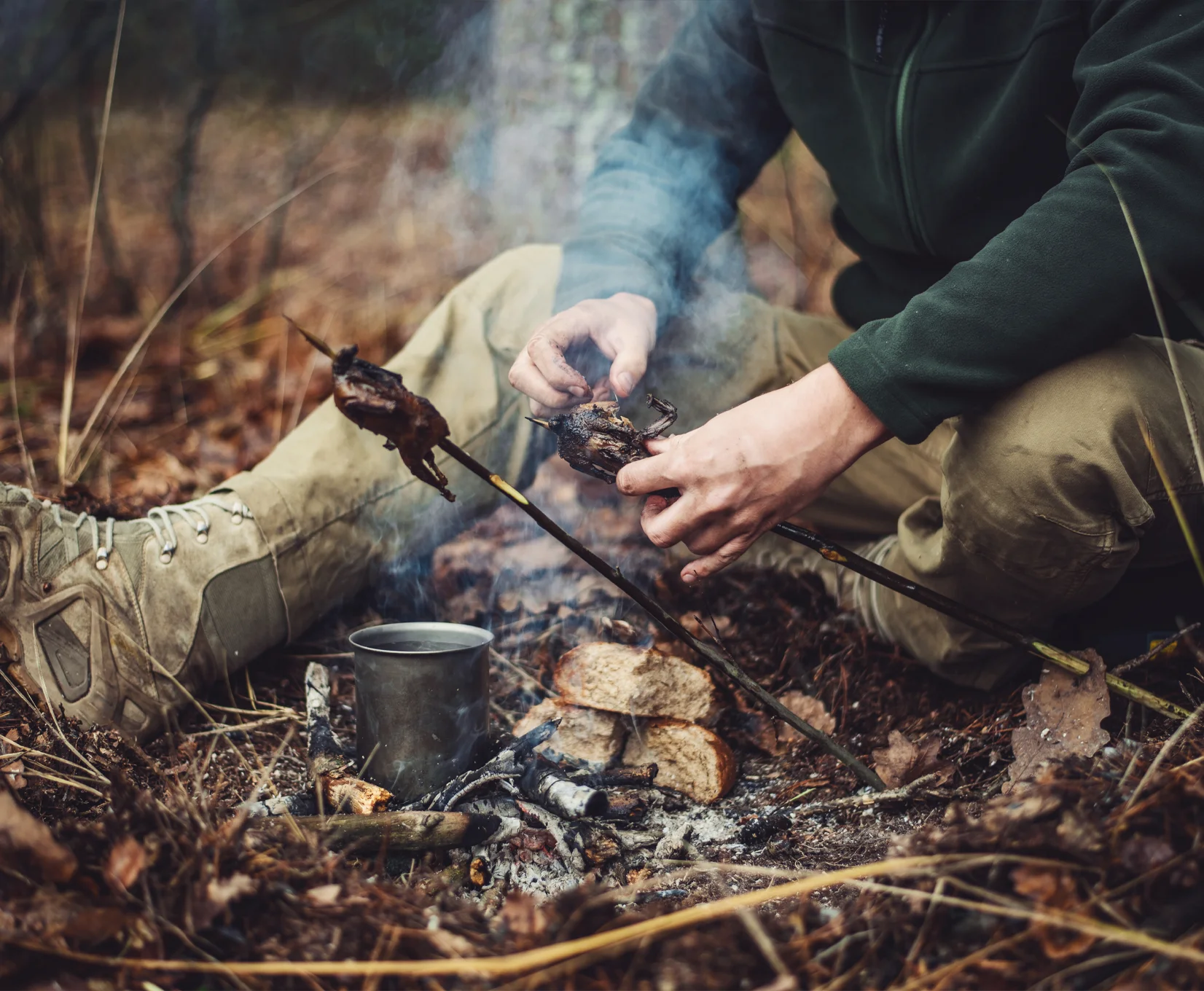
The idea behind EDC is by no means new. Long before the term became popular, people carried tools that helped them in everyday life. From the classic pocket knife to specialised equipment, personal gear has been part of our lives for centuries.
What did Ötzi have with him when he was discovered? Without a doubt, useful items he relied on in his world. A fire-making kit was essential, just as much as a form of first aid (birch polypore as a medicinal fungus). And MacGyver, the cult TV icon of the 1980s and 1990s, also knew that many life-threatening and everyday problems could be solved with a Swiss Army knife, a paperclip and a bit of duct tape. No matter whether it was
EDC Is Not Just EDC
Today, we no longer depend on a fire-starting kit with tinder fungus, our world has become more complex and more digital. Still, there’s no question that each of us carries some form of EDC (even if we don’t call it that), and that a Swiss Army knife remains a useful item for your pocket or jacket. That said, different situations call for different setups.
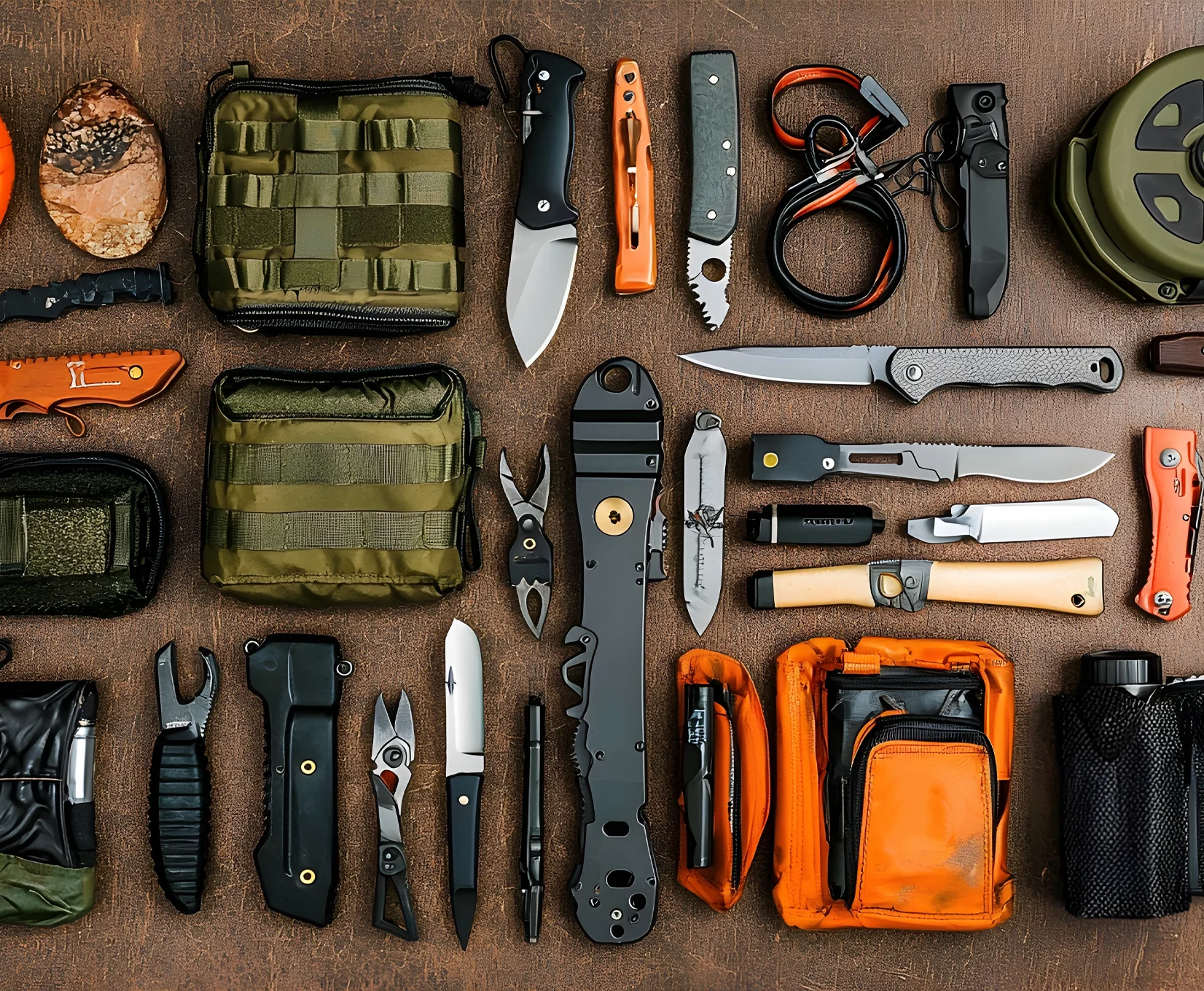
Two examples: A father taking his two young children (one and three years old) on a day out will carry very different things in his backpack compared to someone attempting a solo crossing of the Alps. In one case, nappies are essential, in the other perhaps a compact, high-quality ultralight tent. Someone travelling exclusively in the city using public transport carries different items than a forester working outdoors.

Personal Experience
As an EDC content creator, survival trainer and passionate lockpicker, I genuinely enjoy answering questions from the community. What’s the best EDC set? Which tools should I buy? What’s the best set under 100 euros? There are plenty of questions, but no simple answers. That’s why I recommend the following approach if you want to build or refine your own EDC setup:
1. Think about how you want to carry your EDC. The most useful set is the one you actually have with you every single day.
2. Consider what you need your EDC set for. During my outdoor training sessions, I carry very different items than I would at a formal evening event. Ask yourself whether one set should cover many situations or whether it makes more sense to have different setups for different scenarios.
3. Basics first: In a world where smartphones have become true multitools, guiding us, enabling contactless payments or letting us call for help, a small power bank can decide whether your day goes as planned. In that same world, a debit card can be more useful than an emergency whistle.
Lockpicking Tools as Part of an EDC Set
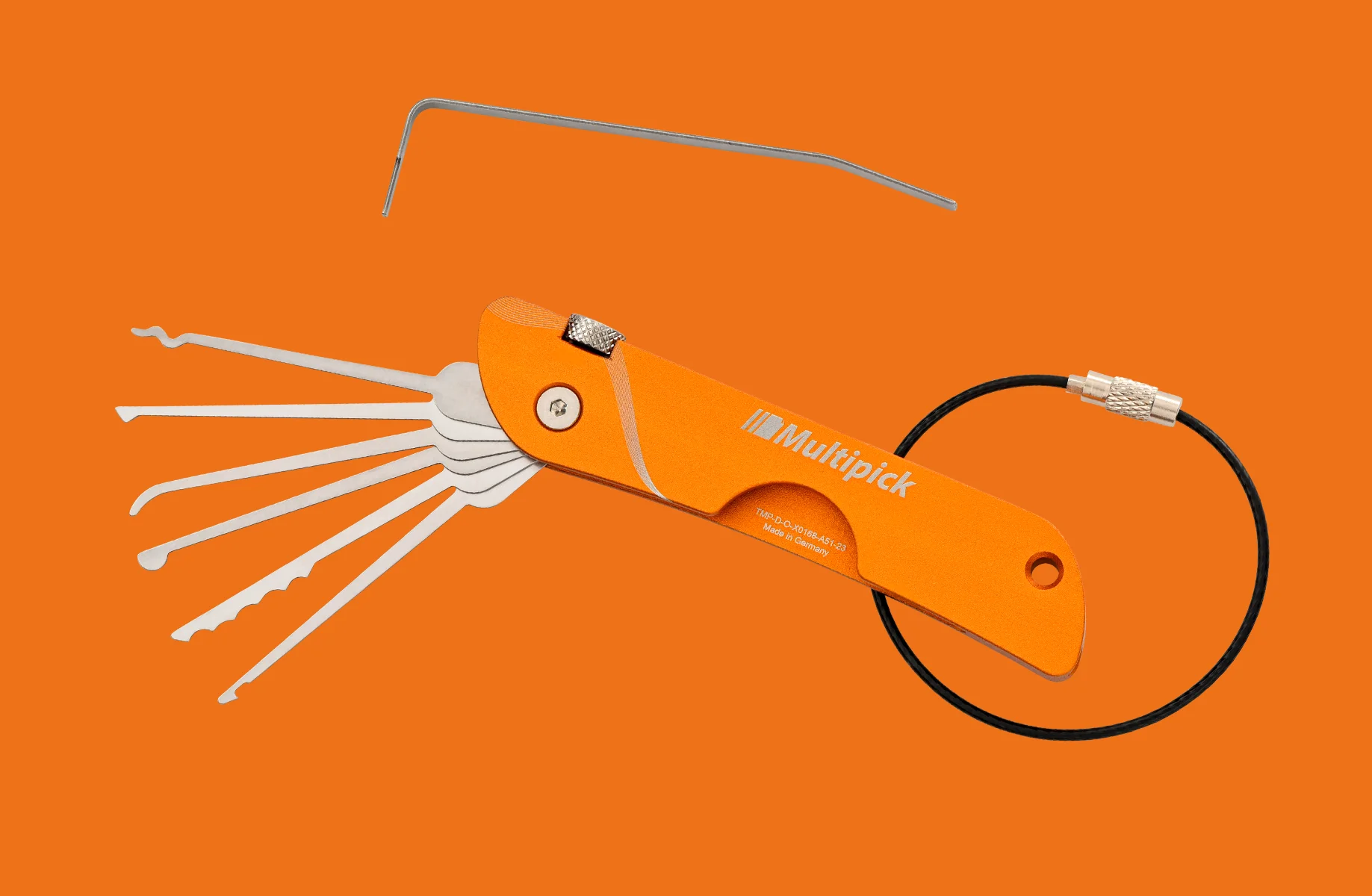
For many EDC enthusiasts, tools like a Swiss Army knife or a Leatherman are still absolute essentials, a toolbox for your pocket. These core tools are increasingly being complemented by compact lockpicking sets. They allow you to train your dexterity and gain a deeper understanding of how modern locking systems work. Instead of checking my phone every spare minute, I like to use waiting times to gradually improve my lockpicking skills. All you need is a compact lockpicking set and, optionally, a training cylinder or a padlock.
Whether you’re a beginner or an experienced user, just 15 minutes of practice a day can quickly take your skills to the next level, and with the right tools, you won’t have to rely on improvising with a paperclip like MacGyver. That brings us to a point that is often overlooked. An EDC set is more than just the tools in your organiser. It’s the combination of tools, skills and mindset that prepares us for both small and bigger challenges.

FAQ – everything you need to know
1. What does Everyday Carry actually mean?
Everyday Carry, usually shortened to EDC, refers to the items you consciously carry with you every day. For some, that’s simply keys, a smartphone and a wallet. For others, it’s a well-thought-out set of tools and useful helpers that solve small everyday problems without the need to improvise each time. That’s exactly where the appeal lies, EDC isn’t a fixed list, but a personal decision with practical value.
2. Why has EDC become so popular in recent years?
Because many people have realised that being well prepared in everyday life is more useful than simply collecting gadgets. Social media has certainly boosted the topic, but the real reason runs deeper. A good EDC setup gives you the feeling of being better prepared for small disruptions, unexpected situations and everyday problems. It sits somewhere between pragmatism, a love of technology and the quiet hope of not being completely helpless when the day decides to take a different turn.
3. Is EDC just a modern trend or is there more behind it?
The term may sound modern, but the idea behind it is ancient. People have been carrying items with them for centuries to help them in everyday life. Whether it was a fire starter, a knife, bandages, coins or today a power bank and a smartphone, at its core it’s always about the same question, what do I really need when I’m out and about? EDC is not a social media invention, it’s more like a modern take on a very old habit. It just looks less like a leather pouch today and more like an organiser.
4. Is there one perfect EDC set for everyone?
No, and that’s one of the most important points. A good EDC set isn’t based on trends, but on your actual daily life. Someone travelling with children needs different things than someone hiking alone. Someone commuting in the city every day has different priorities than someone working outdoors. The best set is therefore not the most expensive or the most impressive one, but the one that is realistically carried and actually useful at the right moment.
5. How should you put together your own EDC in a sensible way?
Ideally not driven by excitement about gear alone, but by honest self-observation. First, be clear about how you want to carry your set, because even the smartest tool is useless if it constantly stays at home. Then think about the situations your everyday life actually brings. Only then does it make sense to choose individual components deliberately. A solid EDC rarely comes together in a single shopping spree, but through small, sensible decisions. It may sound unspectacular, but it’s usually the better approach.
6. Which basics are often part of a sensible EDC?
That depends heavily on your daily routine, but some essentials appear in many setups time and again. A smartphone, keys, a payment card, a small light source or a power bank are often more useful than some particularly fancy tool. The idea is simple, basics come first. If your everyday life relies on battery, access, orientation or communication, practical helpers will usually serve you better than gear that only looks impressive in a photo.
7. Why are skills and mindset more important than an overfilled organiser?
Because a tool alone doesn’t replace ability. A good EDC isn’t just about what you carry, but whether you can use it properly. It’s the combination of the right tools, practice and a calm, clear mind that makes a setup truly useful. Put differently, an expensive organiser full of specialised gear doesn’t automatically make anyone capable. Otherwise, every toolbox would already be proof of character and competence.
8. Can lockpicking tools be part of an EDC set?
For some users, yes, especially if they deliberately engage with the mechanics of locking systems or want to train their skills regularly. In compact formats, such sets are easy to carry and can be used specifically for practice. Context matters, though. These tools aren’t just accessories, they require knowledge, responsibility and a clear framework. That’s exactly why carrying them should never be casual, but always a conscious decision.
9. Why do some people deliberately practise lockpicking in everyday life?
Because short waiting times can be used surprisingly well to improve dexterity, precision and technical understanding. Anyone who regularly works with training cylinders or suitable practice locks builds skills step by step instead of just reading about them in theory. For some, it’s almost meditative, for others more like a technical exercise for the fingers with a learning effect. In both cases, it quickly becomes clear that progress doesn’t come from tricks, but from repetition, patience and proper tools.
10. What ultimately defines a really good EDC?
A good EDC fits the person, not the hype. It supports everyday life, remains easy to carry, doesn’t feel overloaded and is built around real needs. Most importantly, it combines equipment with responsibility, practice and common sense. That’s when a collection of items turns into a meaningful setup. Everything else is often just neatly arranged pocket contents with a slightly inflated sense of self, nice to look at, but not necessarily smarter when it matters.

About the Author Clemens Hoffmann
URBAN ADVENTURER
Ever since childhood, I’ve loved being out in nature, surrounded by clear mountain streams and vast forests. Far away from the stress of everyday life, I’ve always found a sense of calm outdoors. It’s also where I’ve been able to thoroughly test my gear and refine my skills.
EDC ENTHUSIAST
My enthusiasm for high-quality EDC gear and my interest in survival topics have led to my outdoor equipment steadily growing over time. Today, I own an extensive collection of EDC gear and multitools, which I showcase on my social media channels.
INNOVATOR
I combine the knowledge I’ve gained from building my collection and using my equipment with the mindset developed through martial arts, as well as the skills from my training as an innovation manager. The result: I never run out of ideas for new EDC products and improvements.
If you’d like to learn more about Clemens, feel free to visit him on his various channels.



Related Articles
Common Myths About Burglary Protection
That only happens to other people …
Lockpicking in the EU
Lockpicking in the EU: Differences in National Laws – and What Really Happens
Locksmith Services – A Good Reputation Opens Doors
"You're honest, aren't you?" – A Question Loaded with Meaning
About Multipick
Multipick was established here in Bonn in 1997 and has had its headquarters and production facilities here on the Rhine ever since.
Why should we leave here? Anyone who has been here before will agree that it is a very beautiful place and that the people are ‘typically Rhineland’, open-minded and friendly. From an early stage, we began to occupy ourselves with a wide variety of entry tools. We tried out lock snappers and core extractors such as the Bell and gathered a wealth of experience with a wide variety of tools. Whether it was a lock pick set or special tools for fire brigades and locksmiths, in the end the door or window had to be opened. In line with the motto, you got the problem and we got the solution.
Many tools, irrespective of hobby or professional, are dispatched from our warehouse to destinations throughout the world.
Opening tool kits for caretakers and locksmiths, pick sets and lock picking accessories for Locksport enthusiasts and Hobbs hooks for specialists to unlock locked safes. There are thousands of different ways to deploy our specialised tools. Our TFG latch plates and key turners allow a closed door to be reopened. QA Pro 2 and our V-Pro core pulling screws can be used to open a locked door. We also offer milling burrs and drill bits for those situations where there really is no other way. Many useful aids such as MICA opening cards, wedges, door latch spatulas, door handle catches and spiral openers, which are all useful tools to help you get the job done. But even if things get a bit complicated, you are in good hands with us. Products such as the Kronos and Artemis electric picks are our top highlights. Anyone who likes to open dimple locks or disc locks will be delighted with the ARES system. For opening windows, we offer you a range of top products from Kipp-Blitz. Favoured by emergency services such as the fire brigade, THW (Federal Agency for Technical Relief) and police. Many of our tools are manufactured in-house. This gives us the liberty to manufacture quickly and in a customer-orientated manner. No lengthy supply chains and subcontractor dependencies. This has a number of advantages both for you and, of course, for our environment. One big advantage is that you get everything from a single source, enabling us to offer you consistent quality. This is also our promise to you, all from a single source, Made in Germany, Made in Bonn - promised.

