





















Reading time 4 minutes / Lars Buchwald / 12/19/2025
Lock sticking? Here’s what you can do now
Contents of this article
→ When the key won’t turn anymore – a typical everyday moment
→ Why force almost always loses against precision mechanics
→ Lock issue or door tension instead?
→ Practical example: when a small adjustment makes a big difference
→ Immediate help: how to relieve tension from the door
→ The key as an underestimated source of error
→ Why household oils are a bad idea for locks
→ When a key is left inside – increased risk of breakage
→ The stop rule: when you should stop immediately
→ Prevention: door, lock, and cylinder as a complete system
Today, a topic that can instantly trigger real frustration. You’re standing in front of your door, you insert the key into the lock—just like thousands of times before. Everything looks normal, and yet when you try to turn it, nothing happens. And then comes that one impulse almost everyone knows: “Just a little more force, or pull on the door a bit—then it’ll work.”
What you can do without breaking anything
I’ll say it upfront, because it can save you money and nerves: a lock cylinder is a highly complex piece of engineering, with its own quirks—and sometimes problems. If you start pitting force against precision mechanics, both usually lose. The key suffers. The cylinder suffers. And in the end, you’re standing there anyway, staring at the door, feeling even more helpless. And yes, I’ll admit it—I’ve been in that situation myself. Thankfully, I was able to help myself, and I’ll explain how in a moment.
So that you don’t end up in the same situation, let’s approach this calmly and sensibly. Step by step.


Is it really the lock—or is it the door?
This may sound trivial, but it’s the most common cause. Many “jammed” locks aren’t actually broken at all. The door is simply under tension. And that happens faster than you might think. A hot summer day, a cold winter morning, a slightly warped frame, a multi-point locking system that’s no longer perfectly aligned. From the outside, it looks like a lock problem. In reality, the door is pressing on the bolt or latch in just the wrong way, and the cylinder refuses to move.
A typical example comes from my neighborhood.
We had talked weeks earlier about how Jörg’s apartment door had recently become harder to open than usual. Then one evening, my doorbell rang. Jörg was standing there, grinning, and said: what used to be “it’s just a bit stiff” had suddenly turned into “now nothing works at all.” The key would no longer turn. And that’s exactly the moment when many people start pushing the door or trying to force the key. That can have serious consequences for both the key and the lock—so please, never use force.
Thankfully, we were able to solve the problem quickly and easily. I pulled firmly on the door handle to relieve the tension, while Jörg carefully turned the key. Together, that did the trick. The next day, he took a closer look at the strike plate in the frame. It was no longer sitting quite right. After a small adjustment, the door worked perfectly again. And that’s exactly how it should be.
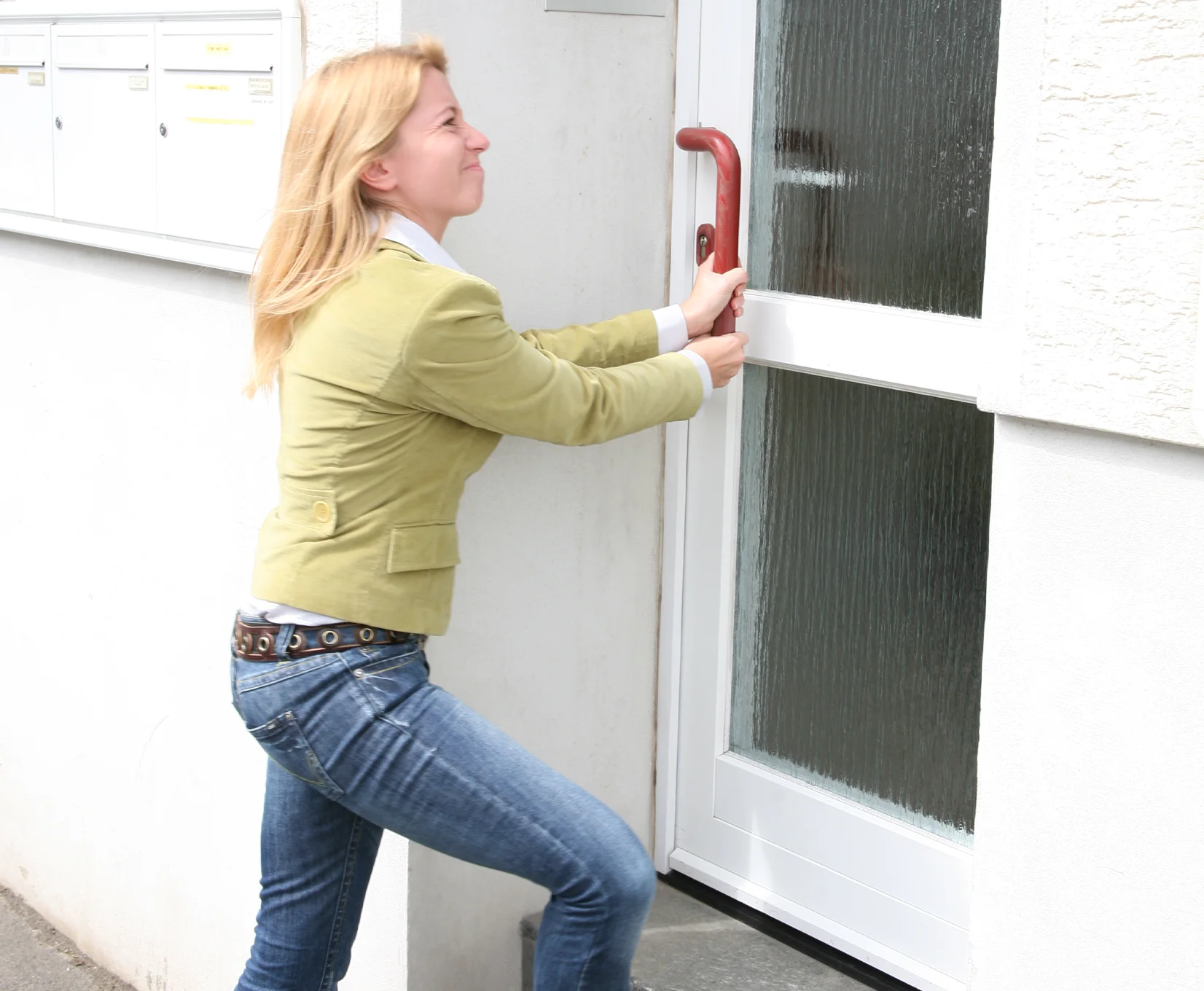
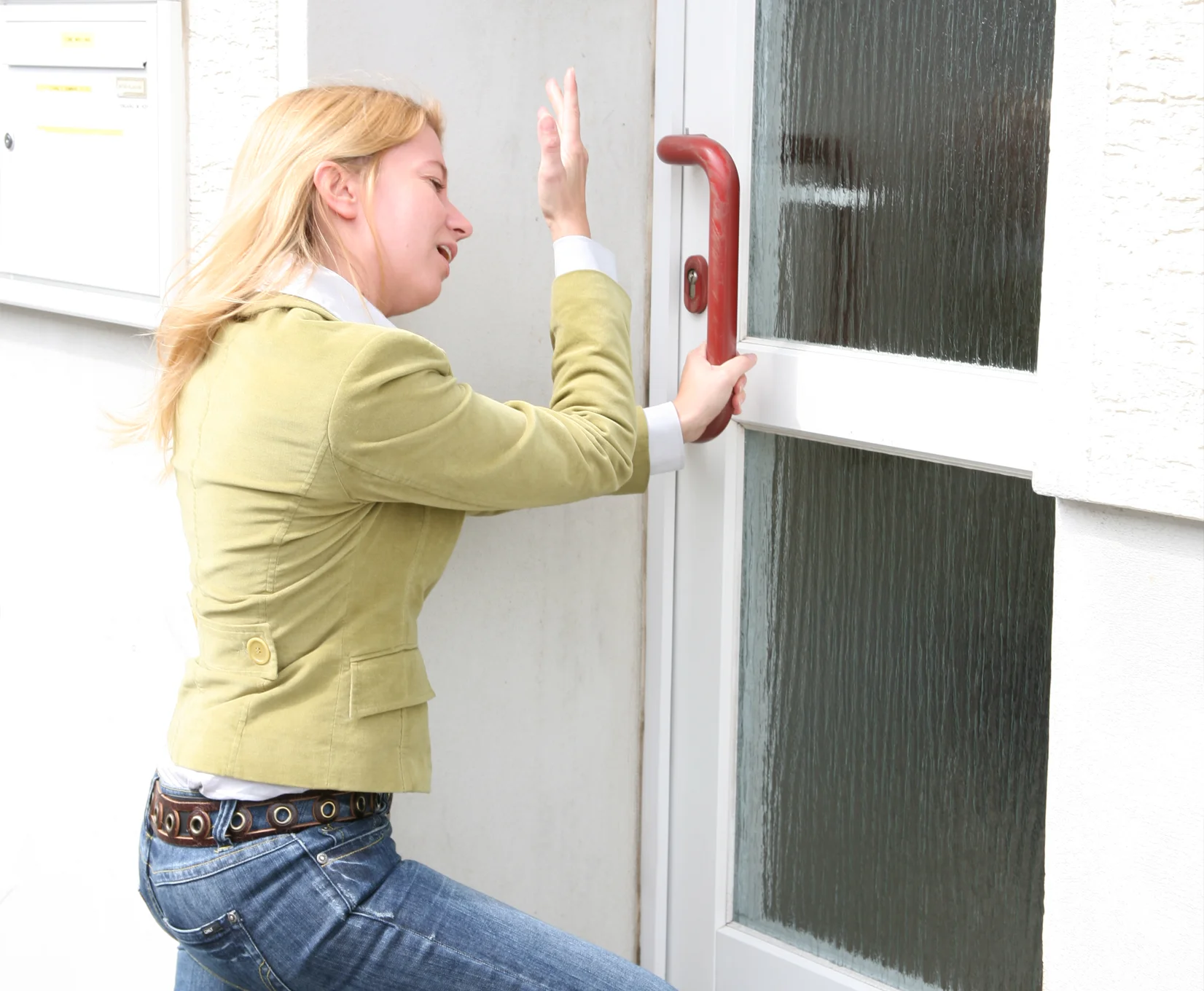
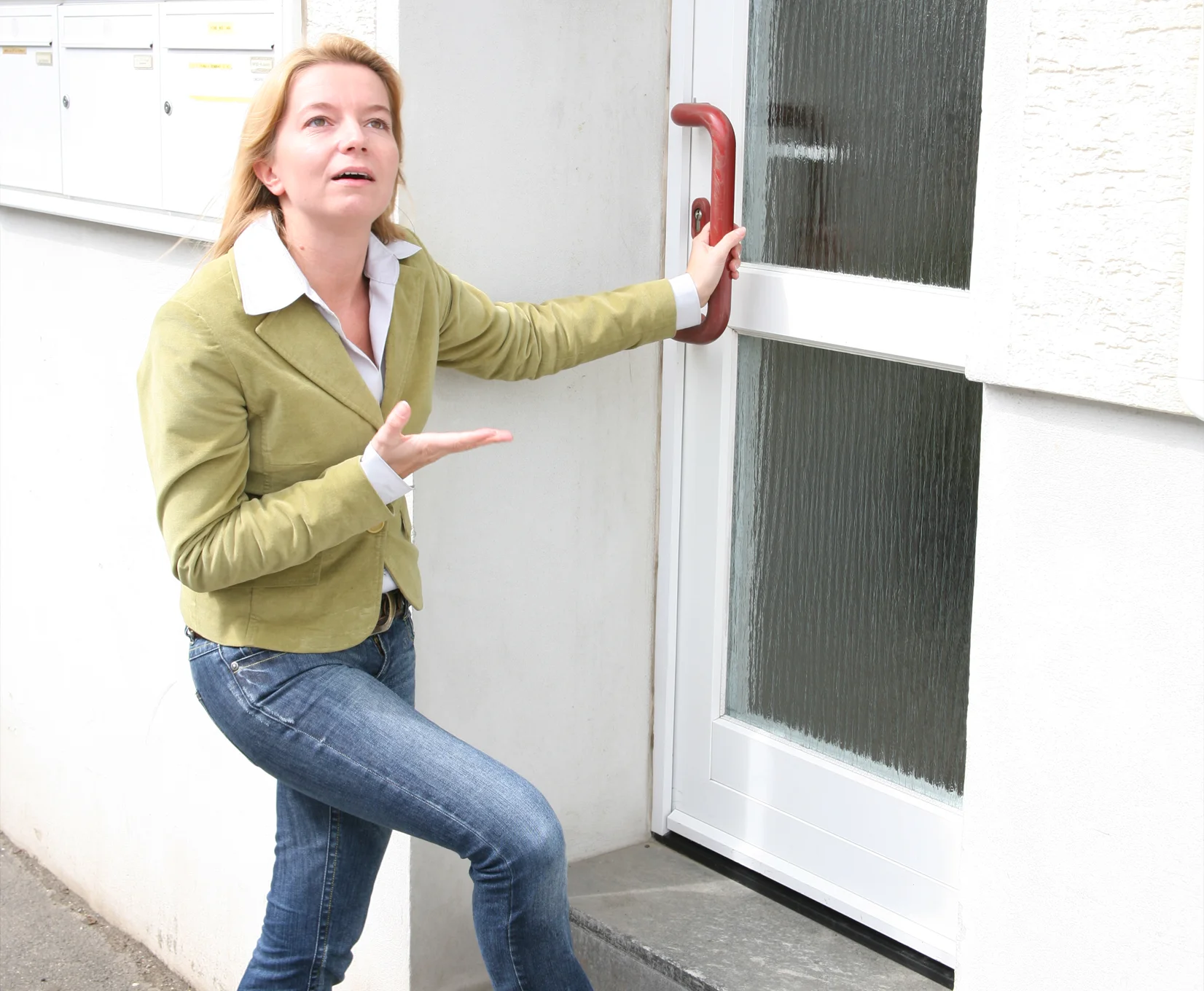
This works immediately in many cases: relieving tension
Before spraying or unscrewing anything, please try this test:
1. Insert the key fully.
2. Gently push the door toward the frame or pull it slightly toward you.
3. While doing so, carefully turn the key—without pushing and without any jerky movement.
If the key suddenly turns, you’ve almost confirmed the main suspicion. The door is under tension, and that tension is blocking the mechanism. This isn’t a major problem, but it’s a clear sign that the hinges, strike plate, or the door adjustment will need correction at some point.
The key itself is more often the culprit than you might think
Keys are everyday objects, but they live a hard life. They get tossed into pockets, slammed onto tables, and sometimes even used as makeshift projectiles. You don’t always see the damage right away, but you can feel it inside the cylinder. If you have a spare key, try it. It can give you a very clear diagnosis. If the spare key works noticeably better, the issue is pretty obvious. Then the lock isn’t defective—the key, or rather its precise fit, is.
Please don’t spray “just anything” into the cylinder
This is the part where many people mean well and later wonder why everything got worse. Household oils or all-purpose sprays may feel like a quick fix at first. For a short time, things run more smoothly. Then dirt binds, dust sticks, residues become sticky, and in the long run the precision mechanics become sluggish rather than smooth.
If maintenance is needed, use a product specifically designed for lock cylinders. Manufacturers regularly point out in their care instructions that unsuitable lubricants can cause problems. And very important: less is more here. A short spray is enough. Then insert the key and move it gently a few times—again, without force. Get proper advice or ask specifically for lubricants made for lock cylinders.
If a key is inserted on the inside, that alone can cause a blockage
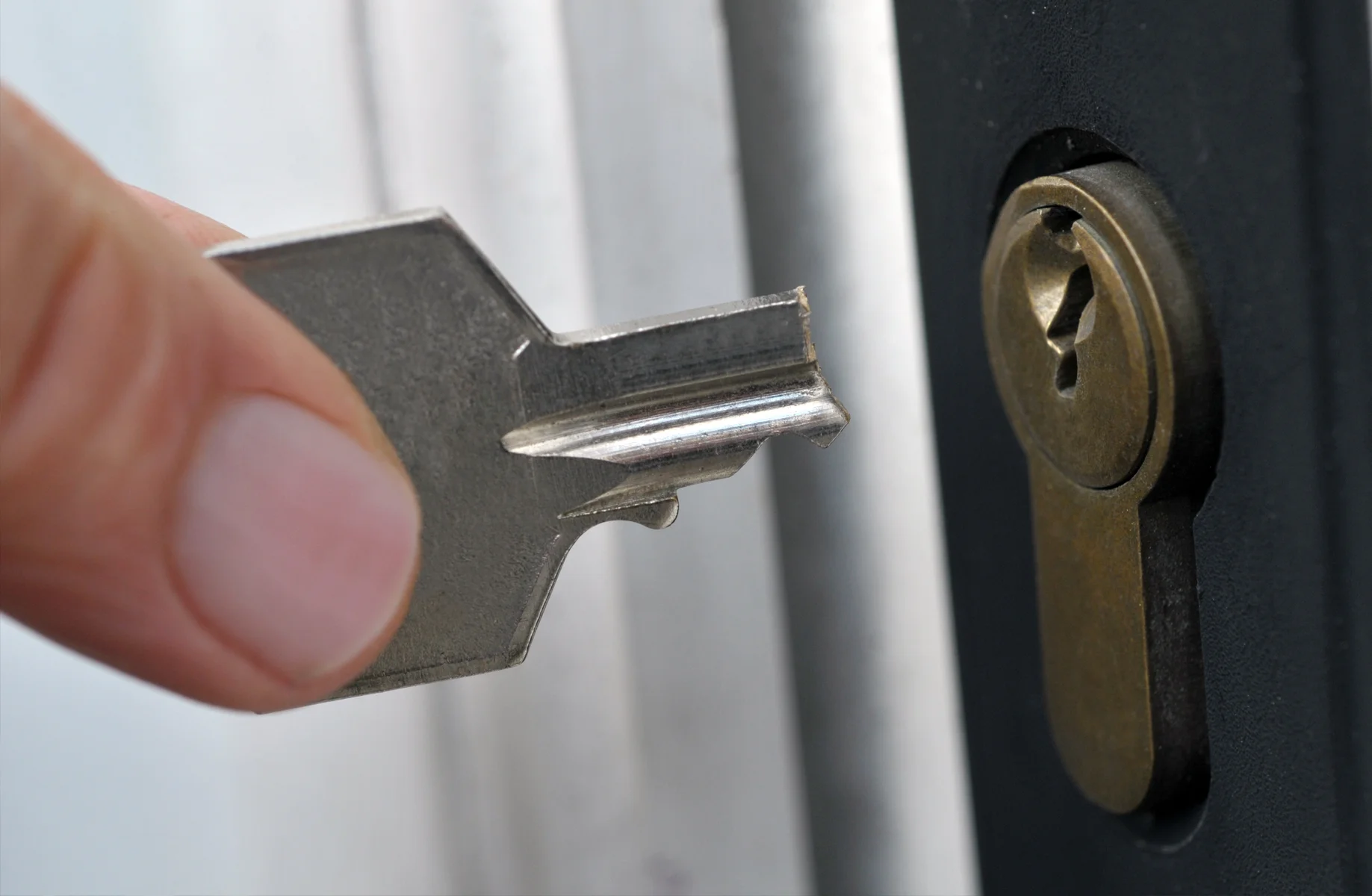
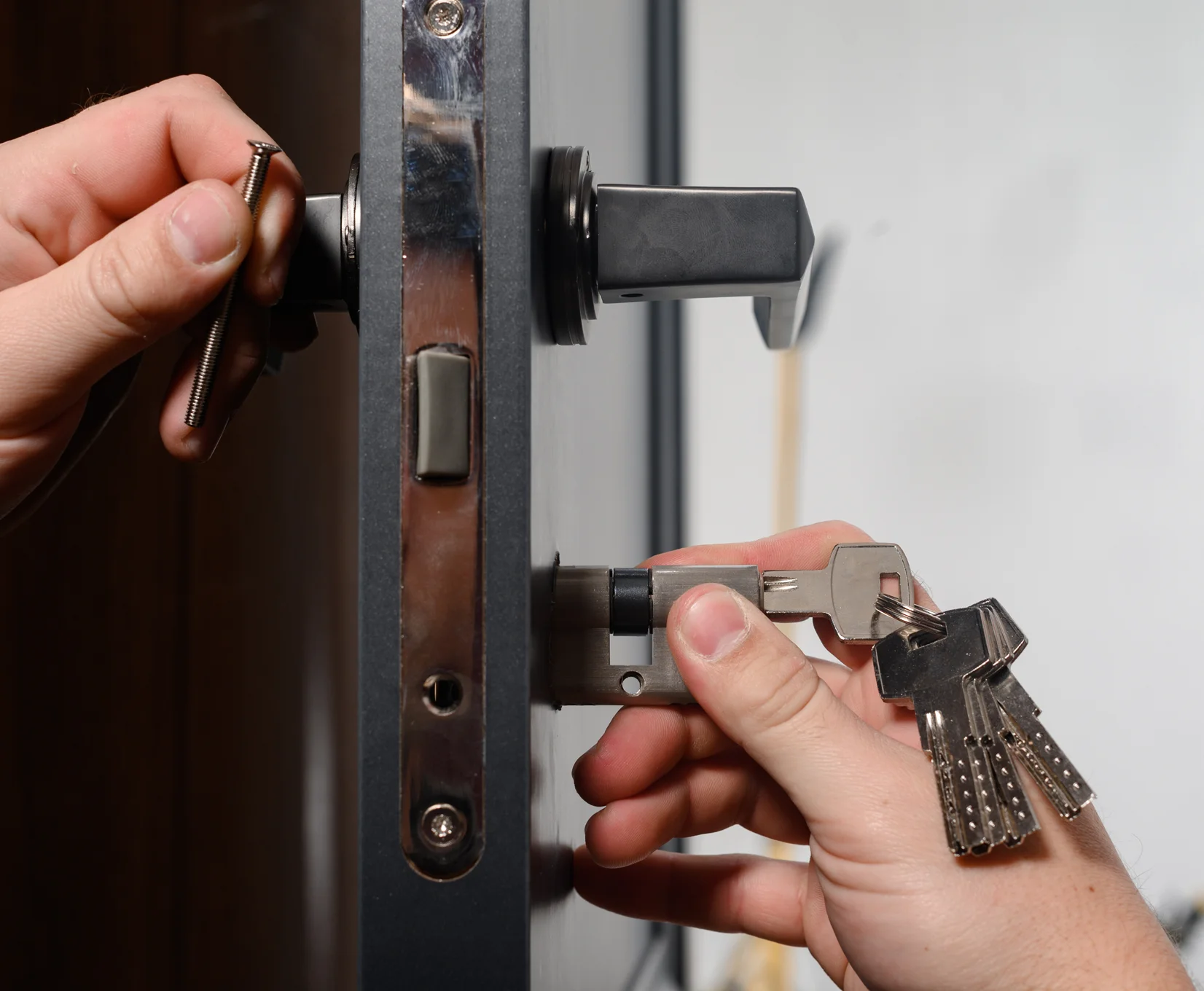
You try to unlock the door and suddenly realize there’s a key inserted on the inside. Depending on the cylinder, this can mean that nothing works from the outside anymore. If you’re standing outside and suspect this, it’s not the moment for experiments. In these situations, key breakages happen especially often, because the instinct is to “just try once more” and force it.
A clear stop rule—before it gets expensive
Stop immediately if any of the following happens: the key feels like it’s twisting. You hear a cracking sound. The movement suddenly becomes rough. Or you feel that you would have to apply more force to continue. That’s the moment when a small issue quickly turns into a damaged cylinder that can only be replaced. And that’s simply unnecessary—and expensive.
How to prevent these problems
If your door is often under tension or the key regularly only works with a lot of sensitivity, a quick check of the mechanics is worth it. Often it’s just a minor issue where components no longer align properly. Police crime prevention advice generally points out that the door, fittings, lock, and cylinder should be viewed as a system, because the components only function reliably when they work together properly.
For technical classification, DIN EN 1303 is also relevant, as it defines requirements and testing for lock cylinders. And when it comes to security levels and recognized testing models, VdS is one of the well-known institutions in Germany that is often cited as a reference. So don’t lose heart—address these issues early, before they become expensive.

FAQ – everything you need to know
1. Should I turn harder if the key won’t turn?
No. Applying more force is the most common cause of a broken key. If it doesn’t work with normal torque, the issue is usually door tension, dirt inside the cylinder, or a problem with the key itself.
2. How can I tell if the door is “under tension”?
A typical sign is this: the key only turns when you slightly push or pull the door at the same time. In that case, the interaction between strike plate, latch, bolt, or hinges is often no longer properly aligned.
3. Does WD-40 or household oil help?
Usually not in the long run. Many manufacturers warn against oily or unsuitable products because they can leave residues. Non-greasy maintenance products designed specifically for lock cylinders are the better choice.
4. Graphite powder – a good idea?
That depends on the cylinder. Some manufacturers advise against it, as it can interact unfavorably with other maintenance products or form residues. If you’re unsure, check the manufacturer’s instructions or use a suitable specialist product.
5. What if the key turns but nothing happens?
In that case, the cylinder clutch, the lock follower, or the multi-point locking mechanism may be affected. Don’t keep trying—have it checked, otherwise you risk making the damage worse.
6. What if a key is inserted on the inside?
Depending on the cylinder, the outside key may be blocked. If you’re standing outside, avoid using force. In this situation, professional help is often the cleanest solution.
7. Can cold weather really block a cylinder?
Yes. Moisture and frost can severely reduce smooth operation. It’s better to warm the surrounding area slowly and use a suitable maintenance product—without applying extreme heat.
8. When should I replace the lock cylinder?
If the problem keeps recurring, if the key catches, if the cylinder feels rough, or if there is visible damage to the key. Replacement also makes sense after a key has been lost.
9. Which standard is relevant for lock cylinders?
In the building sector, DIN EN 1303 is a key standard covering requirements and testing procedures for lock cylinders.
10. What is the most common mistake in this situation?
Trying once more with extra force. That often turns a small issue into a real construction project—complete with a broken key stuck in the cylinder.
About the Author
Lars Buchwald has been an integral part of the Multipick team since 2006, where he dedicates his passion and expertise to marketing and graphics. As a trained graphic designer and copywriter, he brings a wealth of experience and creativity to his work, which enables him to convey the messages of the ingenious tools in an appealing and convincing way. With a keen sense for the needs of the target group, he steers Multipick's marketing fortunes. His commitment is characterized by a high degree of sensitivity and the right richer at the right time.
As a native of Bonn, Lars not only has close ties to the region, but has also firmly integrated his passion for marketing spear tools into his professional work. His attachment to the city is reflected in his work and gives his marketing campaigns an authentic, Bonn touch.
Related Articles
Common Myths About Burglary Protection
That only happens to other people …
Lockpicking in the EU
Lockpicking in the EU: Differences in National Laws – and What Really Happens
Locksmith Services – A Good Reputation Opens Doors
"You're honest, aren't you?" – A Question Loaded with Meaning
About Multipick
Multipick was established here in Bonn in 1997 and has had its headquarters and production facilities here on the Rhine ever since.
Why should we leave here? Anyone who has been here before will agree that it is a very beautiful place and that the people are ‘typically Rhineland’, open-minded and friendly. From an early stage, we began to occupy ourselves with a wide variety of entry tools. We tried out lock snappers and core extractors such as the Bell and gathered a wealth of experience with a wide variety of tools. Whether it was a lock pick set or special tools for fire brigades and locksmiths, in the end the door or window had to be opened. In line with the motto, you got the problem and we got the solution.
Many tools, irrespective of hobby or professional, are dispatched from our warehouse to destinations throughout the world.
Opening tool kits for caretakers and locksmiths, pick sets and lock picking accessories for Locksport enthusiasts and Hobbs hooks for specialists to unlock locked safes. There are thousands of different ways to deploy our specialised tools. Our TFG latch plates and key turners allow a closed door to be reopened. QA Pro 2 and our V-Pro core pulling screws can be used to open a locked door. We also offer milling burrs and drill bits for those situations where there really is no other way. Many useful aids such as MICA opening cards, wedges, door latch spatulas, door handle catches and spiral openers, which are all useful tools to help you get the job done. But even if things get a bit complicated, you are in good hands with us. Products such as the Kronos and Artemis electric picks are our top highlights. Anyone who likes to open dimple locks or disc locks will be delighted with the ARES system. For opening windows, we offer you a range of top products from Kipp-Blitz. Favoured by emergency services such as the fire brigade, THW (Federal Agency for Technical Relief) and police. Many of our tools are manufactured in-house. This gives us the liberty to manufacture quickly and in a customer-orientated manner. No lengthy supply chains and subcontractor dependencies. This has a number of advantages both for you and, of course, for our environment. One big advantage is that you get everything from a single source, enabling us to offer you consistent quality. This is also our promise to you, all from a single source, Made in Germany, Made in Bonn - promised.

