










Reading time 4 minutes / Lars Buchwald / 25.11.2025
The fire department destroys your front door – now what?
Content of the article
→ When an emergency occurs – fire department destroys your front door
→ Who pays for the damage? Between tenancy law and emergency law
→ Example from Thuringia – what the ruling clarifies
→ Germany: clear liability rules for landlords and tenants
→ England/Wales: proportionality instead of automatism
→ Spain: civil law, insurance and personal responsibility
→ France: insurance system with clear liability logic
→ USA: when law is a state matter – a patchwork system
→ What this means for landlords, tenants and emergency services
→ Our stance: responsibility and precision during operations
→ Legal notice – no legal advice, but guidance
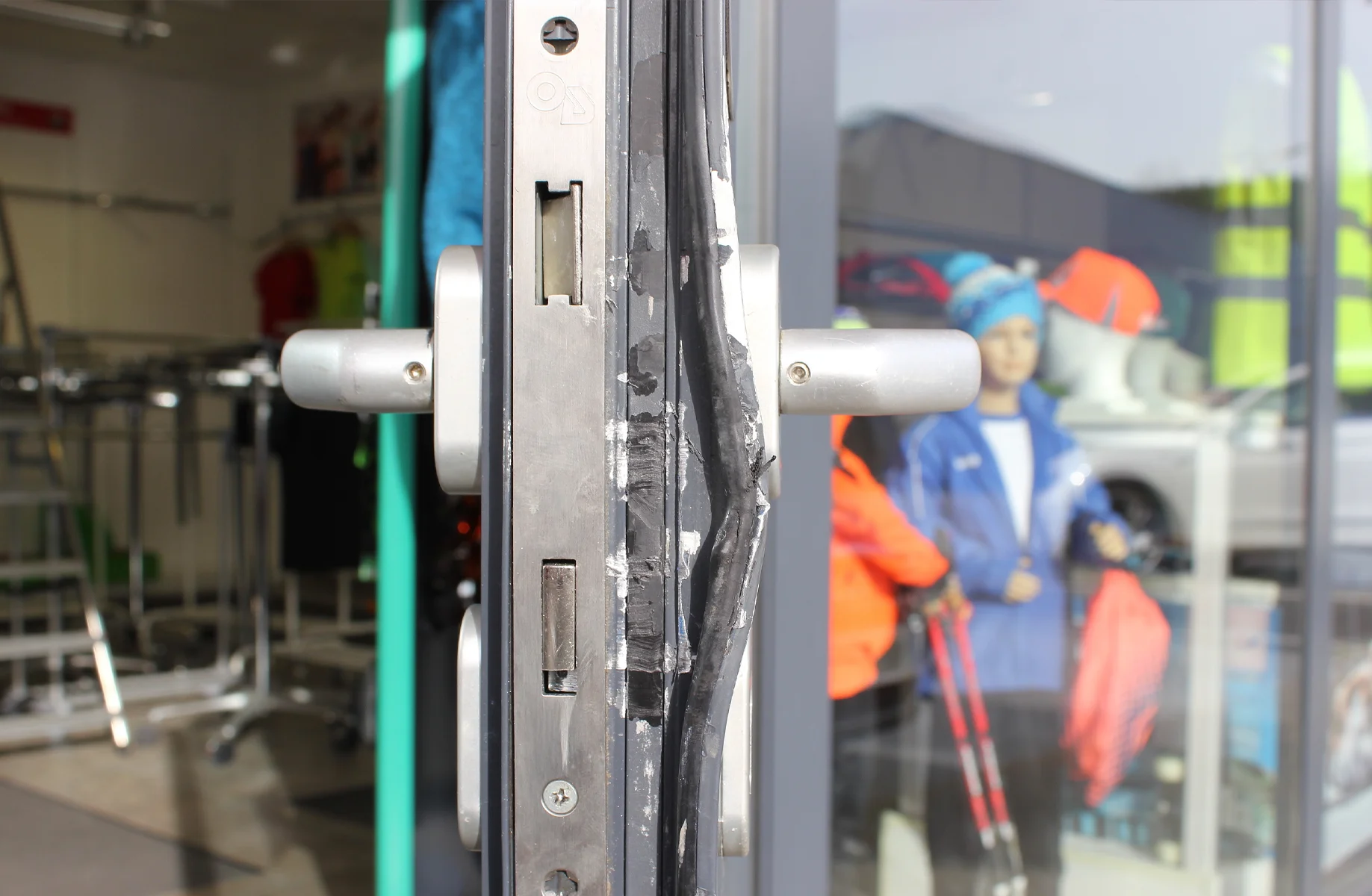
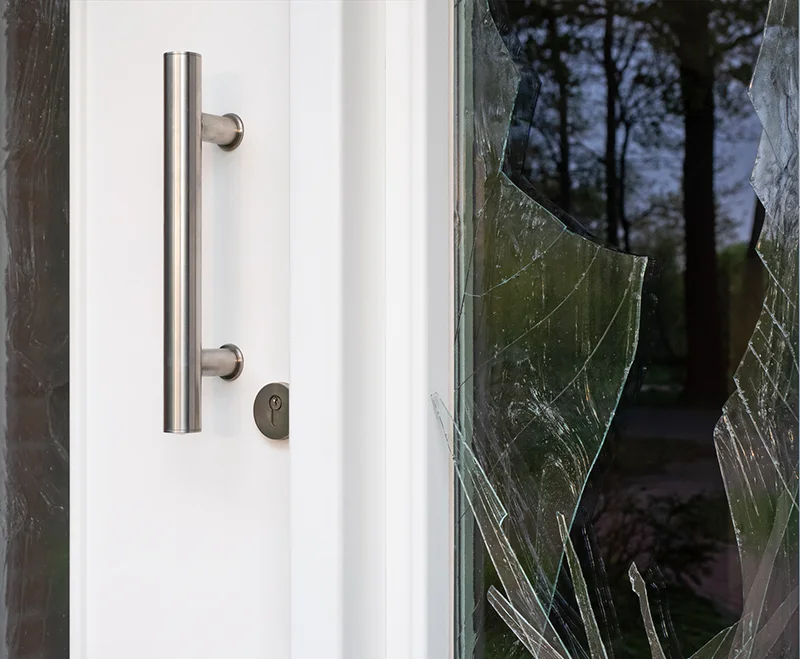
There are days when you wake up without the slightest idea of what might unfold. A scenario you hope will never happen — until it does. A fire, a defective smoke detector, or another incident that forces the fire department to break into your home or apartment. In some operations, firefighters have no choice and must force the door open — and suddenly the door leaf is hanging crooked in the frame.
As long as human lives are at stake, no one on site asks about property rights or insurance numbers. Understandably so. But after the emergency is over, the question naturally arises: Who actually pays for the damage?
Current rulings for landlords and tenants
Between tenancy law, insurance terms, and emergency response regulations, a small legal minefield emerges. And because there are now several recent decisions on this topic, it’s worth taking a closer look at what applies today — in Germany and internationally.
An example from real life
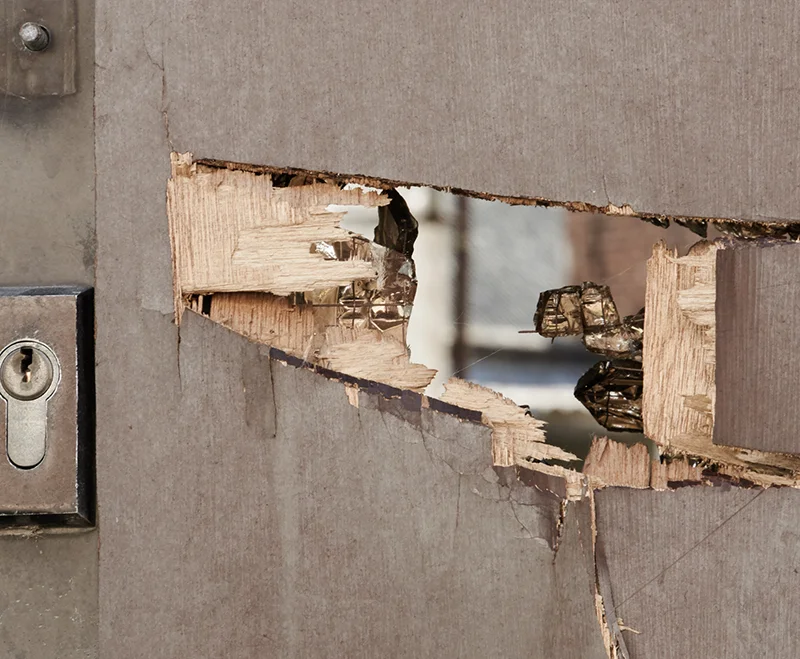
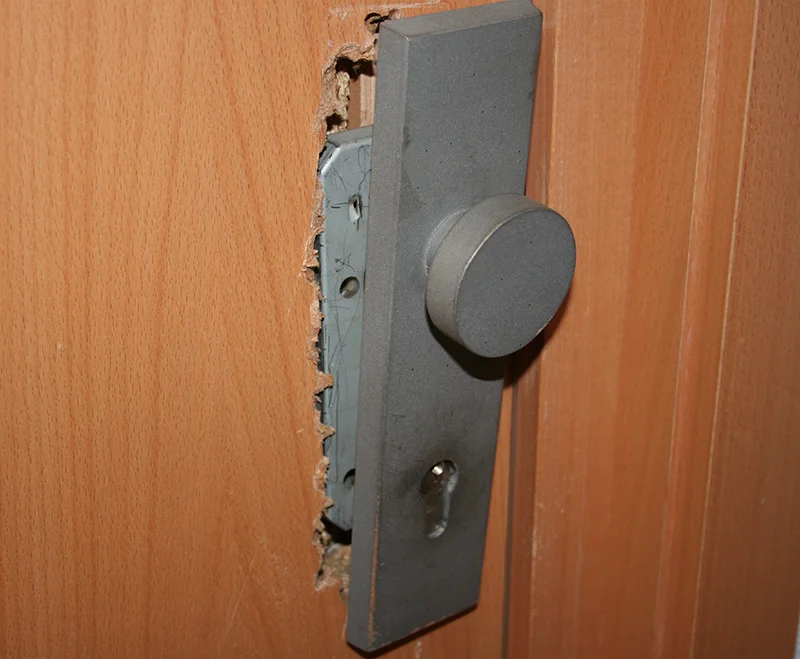
In Thuringia, a neighbor became concerned that a resident might be lying unconscious in her apartment. He dialed the emergency number and alerted the rescue services. Minutes later, the fire department stood in front of the apartment door — an older wooden door that was already slightly warped and hardly inspired confidence. The lock case appeared unstable, poorly repaired, and far from reliable. As the firefighters applied their tools, the suspicion was confirmed: even before any significant pressure was applied, the lock case gave way. The wood splintered, the frame tore — the door was beyond saving.
Later it turned out that the landlord refused to pay for the damage.
The Local Court of Hildburghausen (ruling of 22.05.2024, case no. 21 C 133/23) decided clearly: the landlord must cover the costs because the tenant was not at fault.
Ruling:
https://dejure.org/dienste/vernetzung/rechtsprechung?Text=21%20C%20133/23


So we’re right in the middle of the topic — here are some interesting facts and court rulings on similar incidents from Europe and the USA
Germany – what is the situation in these cases?
Legal basis
• Landlords must keep the rental property in proper condition (§ 535 BGB).
• If the door is opened during a justified emergency operation, the tenant has committed no wrongdoing.
• Only if the tenant caused the operation (e.g., negligent false alarm — smoke detector maintenance, etc.) can they be held liable.
• The Local Court of Hannover (case no. 537 C 17077/05) confirmed: no liability for the tenant without a breach of duty.
Ruling:
https://dejure.org/dienste/vernetzung/rechtsprechung?Aktenzeichen=537%20C%2017077/05
Conclusion for Germany:
Germany follows a clear line: in the case of a lawful rescue operation, the landlord usually pays — as long as the tenant did not trigger the emergency through fault.
For landlords: check insurance coverage and establish clear procedures for emergency access.
For tenants: in an emergency, there is no need to fear a bill for the destroyed door.
England / Wales – “Reasonable, proportionate, necessary”
In England, a Parliamentary Briefing defines when emergency services may damage doors and who is liable:
“Compensation … is unlikely if the search was lawful and the force used was reasonable, proportionate and necessary.”
Source:
https://researchbriefings.files.parliament.uk/documents/SN06627/SN06627.pdf
This is less about tenancy law and more about the proportionality of state action.
If the operation was lawful → often no compensation.
If disproportionate → possible claims against the police/authority.
The same principles apply to fire department emergency openings.
Conclusion for England/Wales:
There is no automatic assumption of who pays. If the operation was lawful, the affected person often bears the damage. The key question is: was the intervention necessary and proportionate?
Anyone living in England should absolutely check their home and building insurance.
Spain – civil law and insurance at the center
Spain has no specific “fire department door-opening” law. Liability comes from general civil law (“responsabilidad civil”):
“Damages must be borne by the party responsible or their insurer.”
https://legalallies.es/en/civil-law/civil-liability-for-damages-who-pays-what-and-when-in-spain/
This means:
• If the operation was justified → emergency services rarely liable.
• Damage is usually handled through building insurance.
• Only if emergency services acted negligently (e.g., gross error) are claims possible.
Concrete rulings for this exact scenario are rarely published.
Conclusion for Spain:
Insurance usually covers the damage, but not necessarily the state or fire department.
The property owner must initially handle the damage and then check whether insurance applies.
For tenants, the answer depends on the rental contract and insurance coverage.
France – an insurance-driven system with clear logic
France relies heavily on strict liability and building insurance structures.
Reference example:
https://www.europe-consommateurs.eu/en/living-in-france/insurance-in-france.html
Principle:
• The party causing the damage → is liable, or their insurance.
• Firefighters/emergency services act under the Code de la Sécurité Intérieure → rarely liable as long as the intervention was justified.
• Disputes often arise between landlords, tenants, and insurers — not with the fire department.
Conclusion for France:
The fire department practically never pays.
Costs fall to the property owner or their insurance — except in rare cases of gross error during the operation.
France is strongly insurance-oriented — without a proper policy, it gets expensive.
USA – Door destroyed? Welcome to state law chaos
In the United States, there is no unified regulation. Every state has its own rules.
Legal basis:
Brigham City v. Stuart (547 U.S. 398, 2006)
Police (and by extension emergency services) may enter without a warrant if “exigent circumstances” exist — meaning danger to life or limb.
https://en.wikipedia.org/wiki/Brigham_City_v._Stuart
Who pays?
• In many cases: no one — the affected party has to bear the damage.
• Some states allow claims against the city/authority.
• Insurance coverage depends on the policy.
Guides confirm this range:
https://legalclarity.org/fire-department-broke-my-door-who-is-responsible-for-paying/
Conclusion USA:
The United States has the most confusing system. In many states, affected individuals must cover the damage themselves, even if the fire department destroyed the door — as long as the operation was justified.
Depending on the state, exceptions exist.
Anyone who owns property there should examine insurance coverage very carefully.
What does this mean for your practical work?
Whether you are a landlord, property manager, fire department or technical service provider: dealing with forced door openings remains a sensitive topic.
What is consistent across all countries:
• Emergencies almost always justify forced entry.
• Emergency services rarely bear the costs.
• Insurance plays the most important role.
• Good documentation protects everyone involved.
Being prepared prevents unnecessary trouble.
Our position on forced openings during operations
In the end, this topic concerns not only landlords, tenants or insurers. Any one of us might one day find ourselves in a situation where firefighters or paramedics urgently need access. Every minute counts — and no one wants emergency crews to hesitate for even a second because they fear a potential liability dispute.
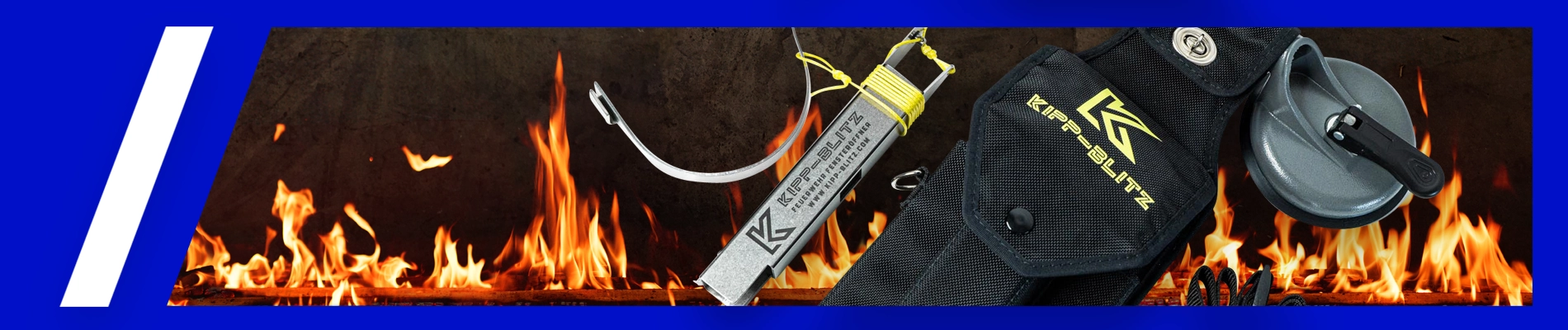
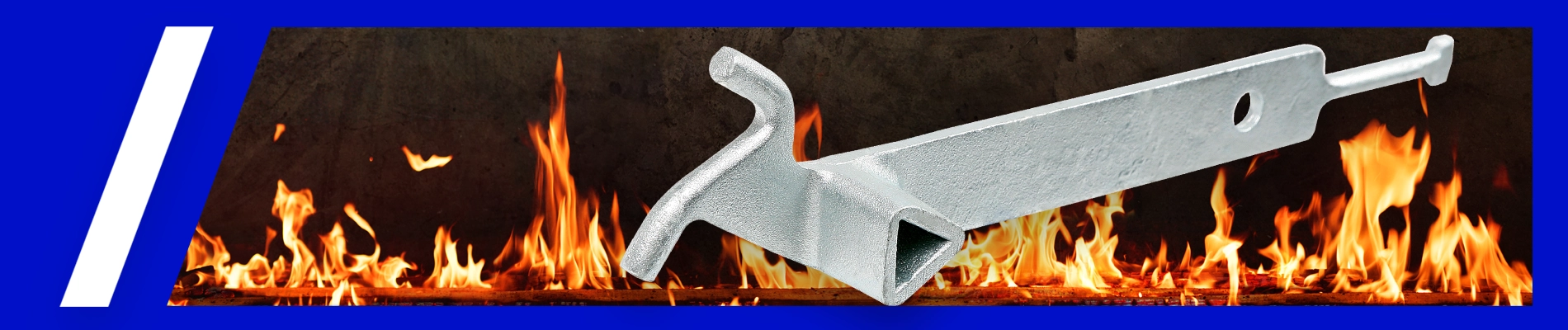
That’s exactly why we at Multipick see a clear responsibility: We want to provide emergency services with tools that work reliably while being as gentle as possible.
Firefighters make split-second decisions that can save lives — and they do so at a very high professional level in Germany. The fact that many fire departments now use technical solutions that avoid unnecessary damage is no coincidence. It’s the result of training, experience and high-quality equipment.
We are grateful that our products play a role in this environment — as solid, precise and dependable companions in the field. Our goal is to deliver technology that makes day-to-day work easier and reduces damage whenever the situation allows.
Because in the end, that’s what matters: access that is fast enough to protect people — and at the same time careful enough to avoid more damage than absolutely necessary.
Legal notice
This article does not constitute legal advice.
All information reflects the state of 2025 and is based on publicly available sources.
Laws and court rulings may change at any time — for binding information, qualified legal advice is always required.

FAQ – everything you need to know
Does the fire department have to pay compensation if they destroy my door?
In most countries — including Germany — the answer is no. Emergency crews act under sovereign emergency powers. If there is imminent danger, they are allowed to damage doors without being liable for the costs afterward. Only in rare cases involving gross errors or disproportionate force may compensation claims arise.
Who pays in Germany if my apartment door is damaged during a justified emergency operation?
In Germany, the landlord usually bears the costs, provided the tenant did not act negligently. Case law is clear: if the operation was justified, the risk lies with the property owner or their building insurance. Recent rulings confirm this, such as AG Hildburghausen (2024) and AG Hannover (2005).
Do I have to pay as a tenant if the emergency was triggered by a false alarm?
That depends on the cause. If you triggered the false alarm through negligence — for example, by tampering with or failing to maintain smoke detectors — a cost contribution may be possible. If the false alarm was technical or occurred without your involvement, you generally do not have to pay.
What if the door was already in poor condition and practically fell apart during the opening?
Then it is very likely that the landlord must pay. Property owners are obligated to keep doors and locks in proper condition. If the door gives way under minimal pressure during the operation, this indicates a maintenance issue rather than an operational error.
Does home or building insurance automatically cover the damage?
Not automatically. Many policies cover such cases, but the terms differ greatly. Some insurers compensate damages from rescue operations immediately, others only in the event of fire or actual danger. Reviewing the policy terms is worthwhile — especially in countries like England, France, or the USA, where coverage varies significantly.
How does damage processing work in practice after a fire department operation?
After the operation, the owner or tenant documents the damage with photos and obtains a written confirmation of the deployment from the fire department. The damage is then reported to the building or home insurance. In rental properties, the tenant also informs the landlord so they can take over the settlement process.
Does the state pay if the operation was unnecessary or the suspicion turned out to be unfounded?
No. Even an unfounded suspicion — for example, a presumed medical emergency — legitimizes the operation. The key criterion is: was the situation objectively understandable? If so, the intervention is lawful even if no emergency is found. Costs still fall to the property owner or their insurance.
How do international regulations differ when doors are destroyed?
Germany takes a tenant-friendly approach and usually assigns liability to the landlord. England and Wales focus on proportionality and often require affected parties to pay themselves. Spain and France rely heavily on insurance systems. The USA is a patchwork of state laws — and there, affected individuals most often bear the costs themselves.
What role does the incident report play — and why is it important?
The incident report documents the reason, urgency and method of the door opening. Insurers almost always require this document. It clarifies whether the intervention was justified and whether any gross errors by the emergency services are apparent. Without the report, the claims process becomes significantly more difficult.
Can modern tools reduce damage — and is it worthwhile for fire departments?
Yes. Many fire departments now use precise entry tools that open doors in a controlled way and with fewer collateral damages. This saves time, lowers follow-up costs and reduces disputes after the operation. For landlords and municipalities, this means fewer long-term conflicts and lower maintenance expenses.
About the Author
Lars Buchwald has been an integral part of the Multipick team since 2006, where he dedicates his passion and expertise to marketing and graphics. As a trained graphic designer and copywriter, he brings a wealth of experience and creativity to his work, which enables him to convey the messages of the ingenious tools in an appealing and convincing way. With a keen sense for the needs of the target group, he steers Multipick's marketing fortunes. His commitment is characterized by a high degree of sensitivity and the right richer at the right time.
As a native of Bonn, Lars not only has close ties to the region, but has also firmly integrated his passion for marketing spear tools into his professional work. His attachment to the city is reflected in his work and gives his marketing campaigns an authentic, Bonn touch.
Related Articles
Burglary Protection Myths
That only happens to other people …
Lockpicking Across the EU
Lockpicking in the EU: Differences in National Laws – and What Really Happens
Locksmith Services – A Good Reputation Opens Doors
"You're honest, aren't you?" – A Question Loaded with Meaning
About Multipick
Multipick was established here in Bonn in 1997 and has had its headquarters and production facilities here on the Rhine ever since.
Why should we leave here? Anyone who has been here before will agree that it is a very beautiful place and that the people are ‘typically Rhineland’, open-minded and friendly. From an early stage, we began to occupy ourselves with a wide variety of entry tools. We tried out lock snappers and core extractors such as the Bell and gathered a wealth of experience with a wide variety of tools. Whether it was a lock pick set or special tools for fire brigades and locksmiths, in the end the door or window had to be opened. In line with the motto, you got the problem and we got the solution.
Many tools, irrespective of hobby or professional, are dispatched from our warehouse to destinations throughout the world.
Opening tool kits for caretakers and locksmiths, pick sets and lock picking accessories for Locksport enthusiasts and Hobbs hooks for specialists to unlock locked safes. There are thousands of different ways to deploy our specialised tools. Our TFG latch plates and key turners allow a closed door to be reopened. QA Pro 2 and our V-Pro core pulling screws can be used to open a locked door. We also offer milling burrs and drill bits for those situations where there really is no other way. Many useful aids such as MICA opening cards, wedges, door latch spatulas, door handle catches and spiral openers, which are all useful tools to help you get the job done. But even if things get a bit complicated, you are in good hands with us. Products such as the Kronos and Artemis electric picks are our top highlights. Anyone who likes to open dimple locks or disc locks will be delighted with the ARES system. For opening windows, we offer you a range of top products from Kipp-Blitz. Favoured by emergency services such as the fire brigade, THW (Federal Agency for Technical Relief) and police. Many of our tools are manufactured in-house. This gives us the liberty to manufacture quickly and in a customer-orientated manner. No lengthy supply chains and subcontractor dependencies. This has a number of advantages both for you and, of course, for our environment. One big advantage is that you get everything from a single source, enabling us to offer you consistent quality. This is also our promise to you, all from a single source, Made in Germany, Made in Bonn - promised.

