


Reading time: 6 minutes / Lars Buchwald / 28/05/2026
A key has broken off in the lock?
Article Content
→ When the key suddenly breaks, the moment after
→ Why acting in a panic often makes everything worse
→ Do nothing at first, why staying calm matters now
→ Why keys break in the first place
→ What you can carefully try yourself
→ Specialist tools: helpful, but not a magic solution
→ When a professional should take over
→ The most common mistakes, and why they can get expensive
→ After removal: check the cause instead of just replacing the key
→ Prevention is easier than improvising later
→ Conclusion: Stay calm and don’t make the problem worse
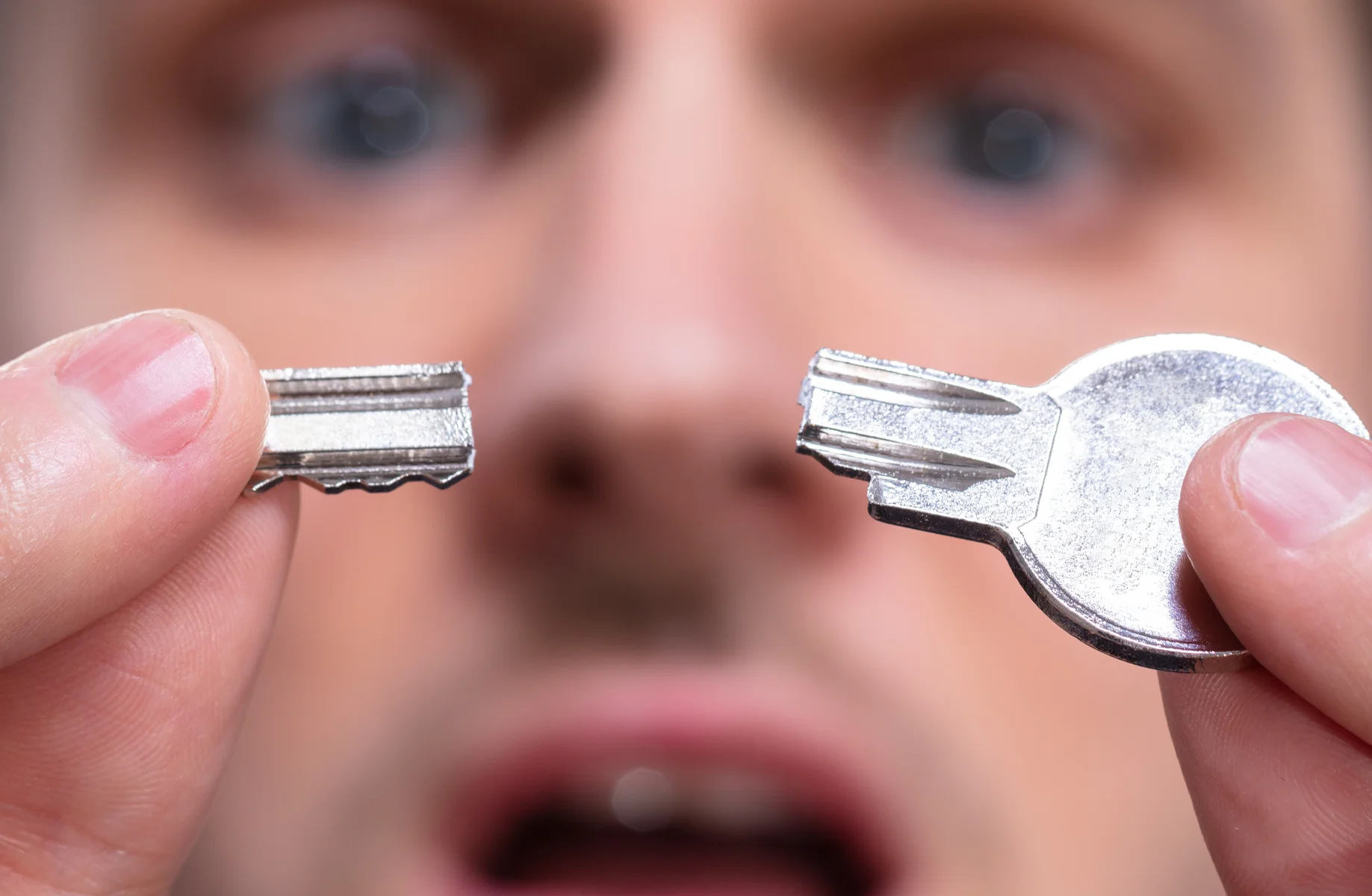
Everyone knows the feeling, some things always seem to happen exactly when you have absolutely no use for them. The front door key is in the lock, you turn it as usual, and then there is that dry “snap.” A little sign that, from now on, the key officially consists of two parts. One is in your hand. The other is stuck in the cylinder, and you need a moment to let that sink in.
What should you do when the key is suddenly only half as long?
A broken key in the lock is annoying, but it does not automatically mean total damage. In many cases, the broken piece can be removed without destroying the lock cylinder. What matters is what happens immediately afterward. What you should definitely not do now is start frantic attempts to fish the broken piece of key out of the keyway. Unfortunately, this is where you can often risk far more than just the damage caused by the broken key itself. And that is exactly where the real problem often begins.


First of all, do nothing, sounds strange, but it is often the best idea
The most important step is not reaching for the toolbox first. Yes, easier said than done. If you are standing outside, maybe with shopping bags, a dog leash, or a wet jacket, you probably do not want to hear a philosophical lecture on metal fatigue, which is understandable. Still, under no circumstances should you push the broken piece further into the cylinder. Do not try to unlock the door “just one more time” with the other half of the key. That is exactly what often pushes the remaining part of the key deeper into the keyway. Then a simple broken key turns into a much bigger problem, with bad mood practically guaranteed. Glue is not a good idea either. Superglue sounds briefly brilliant, but in reality it usually sticks exactly where it has no business being. In the worst case, it glues pins, springs, or moving parts inside the cylinder. Then the key is no longer the problem, the lock itself is. Guides from locksmith and trade websites also warn against pushing the remaining piece further in or using glue without thinking it through.
Why do keys break in the first place?
A key rarely breaks completely without warning. Most of the time, there were small signs beforehand that people tend to ignore in everyday life. The key had been sticking for a while. It would only turn with a slight jerk. Maybe it was visibly bent, heavily worn, or had fine cracks near the blade. A stiff cylinder can also play a role. If the mechanism is dirty, old lubricants have hardened, or the key no longer moves cleanly along the shear line, the load increases. At some point, the weakest part gives way. And that is not always the lock. Often, it is the key. With lock cylinders, durability, usability, and security are always part of the equation. The DIN EN 1303 standard describes requirements and test methods for lock cylinders, including aspects such as durability, corrosion resistance, and security-related properties. That does not mean every everyday cylinder will run smoothly forever. But it does show that a lock is a technical component, and of course it is also subject to wear.
What you can try yourself
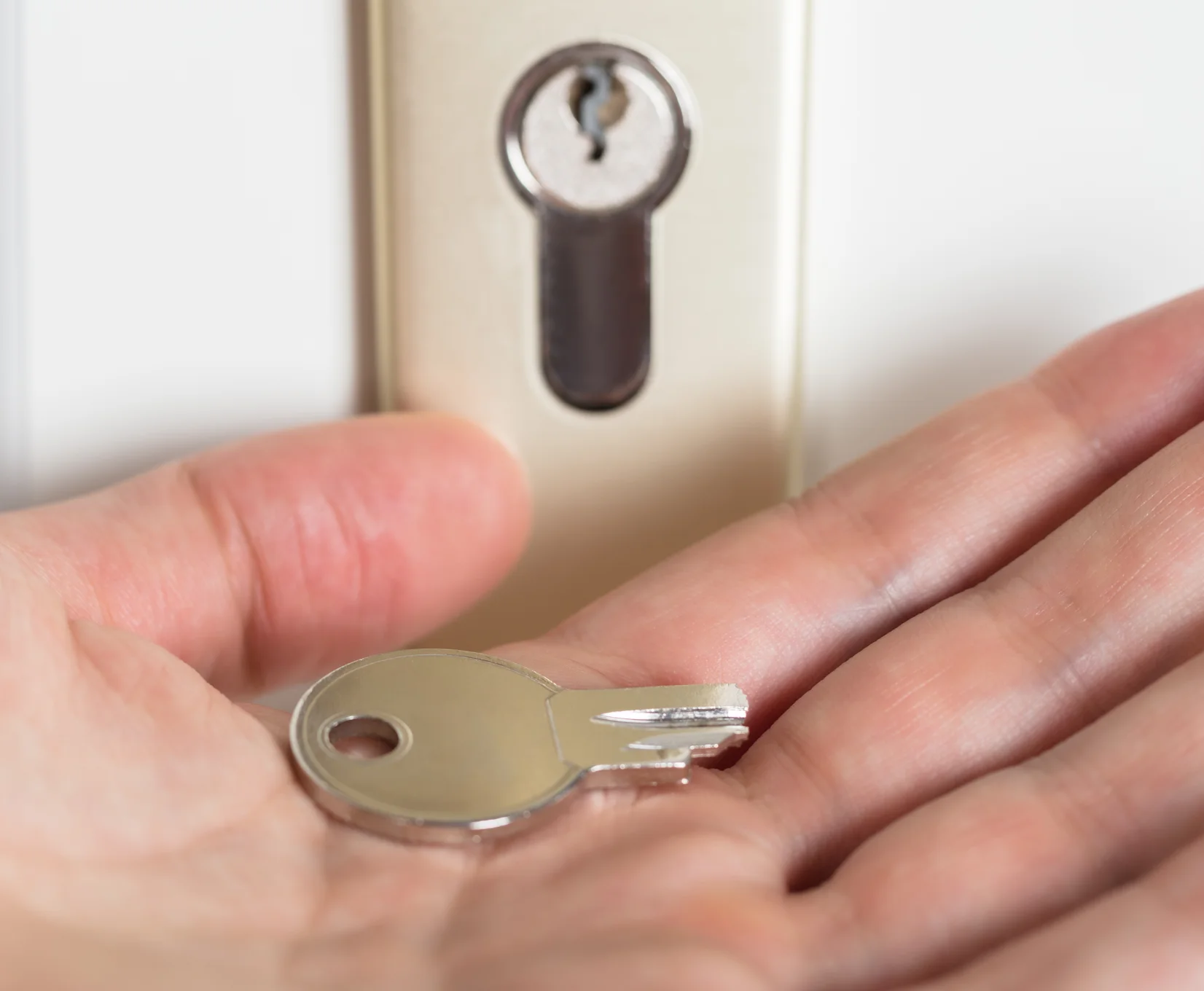
If the broken piece is still visible and protrudes slightly from the cylinder, the chances are good. In that case, you can work carefully. Emphasis on carefully, very carefully. First, the cylinder should be in its neutral position. The keyway must be aligned so that the broken piece can be pulled straight out. If the key broke while half-turned, the piece is often blocked. Then pulling alone will not help much. If part of the key is visible, fine needle-nose pliers or tweezers can help. The important thing is to actually grip the broken piece and not just press against it. If it does not come out right away, do not keep trying again and again. Every failed attempt can push the remaining piece deeper and make the problem worse. A suitable lubricant can help, but here too, use it sparingly. Dry lubricants such as graphite are often recommended because they do not form sticky residues as quickly. Oil-based products can help in the short term, but depending on the product, they may also attract dirt. Many guides mention lubrication as a first preparatory step, while also warning against making the situation worse through frantic pushing and probing.
Even specialist tools are no guarantee
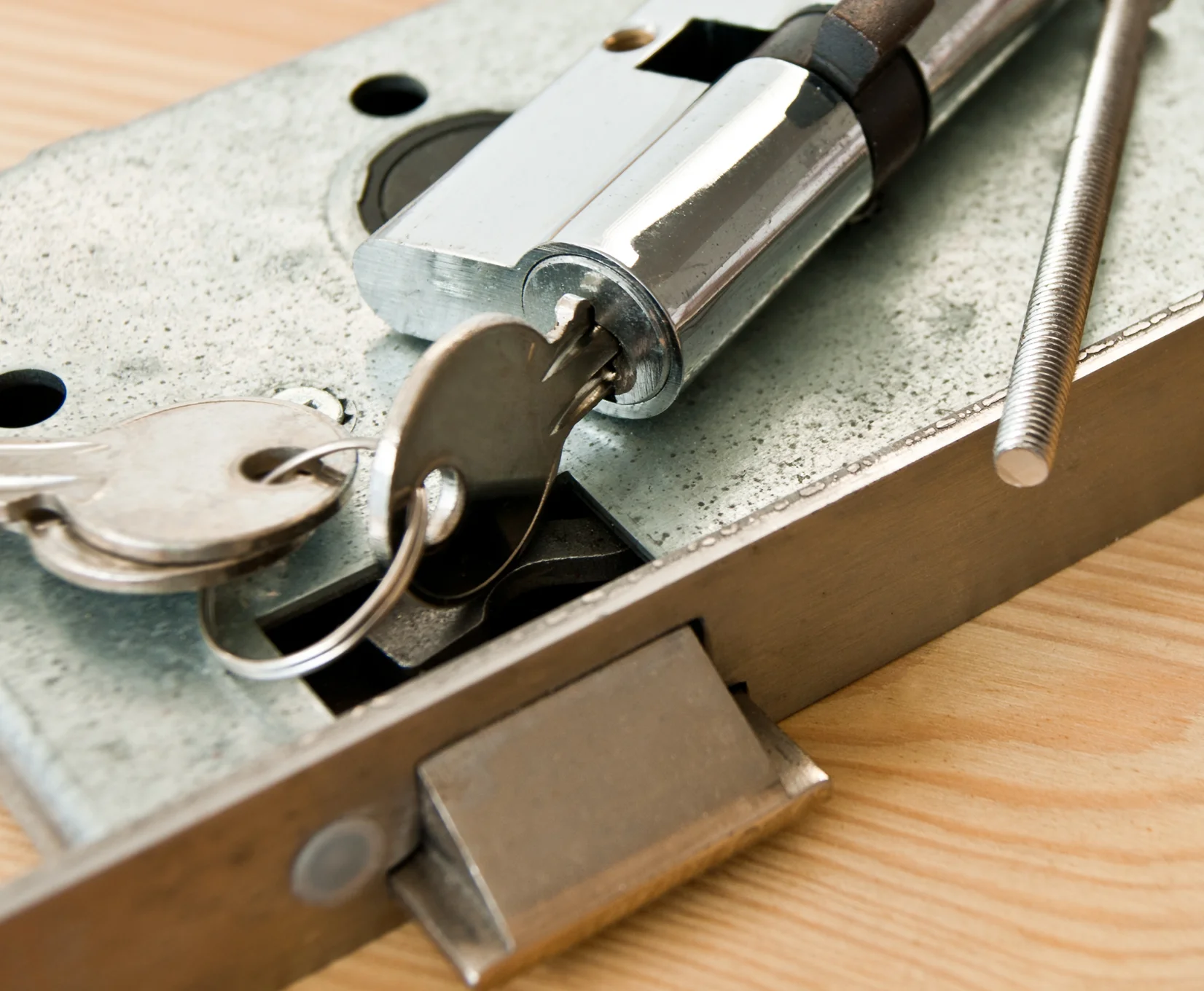
There are special key extractors that can be used to pull a broken piece out of the keyway. That sounds simple, but it is a matter of feel, angle, and experience. Anyone who owns such a tool and knows how to use it can often remove a broken piece cleanly. Anyone who is not familiar with it should be careful. An extractor is thin, delicate, and designed to work inside a narrow keyway. If used incorrectly, it can break, jam, or damage sensitive parts. In the end, you may not only have a broken key stuck in the lock, but a second piece of metal right next to it.
When you should definitely call in a professional
A professional is a sensible choice if the broken piece is not visible, if the key broke while turned, or if the lock had already been sticking before. You should also avoid experimenting for too long with front doors, master key systems, business premises, security-relevant doors, or vehicle locks. A good locksmith will usually first try to remove the broken key fragment with as little damage as possible. Drilling is not normally the first step, but rather the last option. This is exactly where reputable locksmiths differ from the well-known rip-off operators. Media reports and industry advice have been warning for years about dubious emergency locksmith services that lure customers in with low starting prices and then drill unnecessarily or issue inflated bills. So ask in advance about the approximate total price, call-out fees, surcharges, and whether a non-destructive removal attempt will be made first. A reputable service can explain that without turning it into a mystery.
What you should never do
Do not turn it with force. Do not push the remaining piece further in with the second half of the key. Do not use superglue. Do not scrape around inside the cylinder with rough tools. Do not drill out the cylinder just because a short video on the internet made it look wonderfully relaxed. Locks are small, but they are also very delicate. Inside, pins, springs, profiles, and tight tolerances all work together. If you start levering around in there roughly, you can quickly lose the real chance of simply removing the broken piece without replacing the lock. It becomes especially critical with master key systems. If a key from such a system breaks, it is not just one door that may be affected. Depending on the system, security level, and organizational importance, the damage can become significantly more expensive. VdS guidelines show that lock cylinders in security-relevant areas may be subject to different requirements and classes.
Once the broken piece is removed, the matter is not automatically settled
Once the broken piece is out, it is time for a second look. Why did the key break? Was it old, bent, or damaged? Had the cylinder already been sticking before? Are there metal shavings, resistance, or a rough feeling when locking and unlocking? A new key cut from the old pattern only makes sense if the old key was not already heavily worn. If a damaged key is simply copied, sometimes the problem is copied too. If the lock is noticeably stiff, the cylinder should be checked, cleaned, or replaced. Especially with front doors or frequently used doors, this is not an exaggerated security concern, but simple common sense. A lock that demands a small workout every morning will eventually make itself known, unfortunately often in exactly the way described here.
Prevention is easier than fumbling around later
Check your keys regularly for cracks, bends, and heavy wear. Do not use keys as levers, parcel openers, or improvised screwdrivers. Yes, it happens, and no, the key does not find it funny. If a lock starts sticking, you should react early. A smoothly running cylinder not only extends the life of the key, but also your own patience.
Stay calm, assess the situation properly, and do not make things worse
A broken key in the lock is not really a drama, as long as you do not immediately turn it into one. If the broken piece is visible and easy to reach, a careful attempt with suitable tools may work. If it sits deep inside, the cylinder is turned, or the door is security-relevant, a professional should definitely take over. I have had this happen myself with my bike lock and was able to remove the broken key pieces without any problems using an extractor.

FAQ – everything you need to know
1. What should I do first if a key breaks off in the lock?
The most important thing is actually to stay calm at first. Do not push the broken piece deeper into the cylinder and do not try to lock or unlock it again with the other half of the key. That is exactly how the remaining piece often slips further into the keyway, turning a manageable problem into a small metal drama with much worse odds. If the broken key fragment is still visible, it is worth taking a careful look. If it sits deep inside or the cylinder is turned, a professional should take over.
2. Can I pull the broken key out of the lock myself?
Yes, sometimes that works. But only if the broken piece is still visible, the cylinder is in its neutral position, and you can actually grip it. Fine needle-nose pliers or tweezers can help, as long as you do not push, lever, or poke around inside the lock. If the remaining piece does not come out right away, you should stop.
3. Why is superglue not a good idea when a key has broken off?
Because superglue inside a lock rarely stays where you want it to. At first, the idea sounds clever: put glue on the key half, place it against the broken piece, wait, and pull. In practice, however, the glue can run into the keyway and stick pins, springs, or moving parts together. Then it is not just a piece of key stuck in the cylinder, the cylinder itself is damaged. What could have been a repair can quickly turn into a replacement. Superglue belongs in craft boxes, not in lock cylinders.
4. Why do keys break off inside locks in the first place?
Often, the key was already bent, heavily worn, or had small cracks beforehand. A stiff cylinder can also be the cause. If the key regularly sticks, has to be turned with force, or only works with a small jerk, the stress increases every time. At some point, the weakest part gives way. And often that is not the lock, but the key.
5. Does the lock cylinder always have to be replaced after a key breaks?
No, not automatically. If the broken piece can be removed cleanly and the cylinder works smoothly again afterward, it does not necessarily have to be replaced. Still, you should take a closer look after removal. If the lock continues to stick, the key feels rough, or metal shavings are visible, that is a warning sign. In that case, the broken key may not have been the cause, but only the symptom. A new key alone will not solve the problem then, it will only postpone it until the next inconvenient moment.
6. When should I call a locksmith or professional right away?
A professional is a sensible choice if the broken piece is not visible, if the key broke while turned, or if the lock had already been causing problems before. You should also avoid experimenting for too long with front doors, business premises, master key systems, security doors, or vehicle locks. In these cases, one wrong move can become much more expensive than the original damage. A reputable professional will usually first try to remove the remaining key fragment with as little damage as possible. Drilling should not be the first idea, but rather the last.
7. How can I recognize a reputable locksmith?
A reputable locksmith can explain in advance roughly what costs to expect, whether call-out fees, surcharges, or material costs may be added, and whether they will first attempt a low-damage removal. Be careful if you are only given an extremely low teaser price over the phone, and once on site everything suddenly becomes much more complicated, more expensive, and supposedly only possible with a drill. Ask clearly for an approximate total price range.
8. Do key extractors really help with broken keys?
Yes, key extractors can work very well if you know how to use them. They are designed to reach into the narrow keyway and pull out the broken piece. But that is also exactly where the problem lies. The tool is fine, thin, and requires a good feel. If positioned incorrectly, it can jam, break off, or cause additional damage to the cylinder. In the end, you may not only have a broken key stuck in the lock, but a second piece of metal right next to it.
9. Can a broken key be a security risk?
Yes, especially if it involves a front door, a master key system, or a security-relevant access point. As long as a key fragment is stuck in the cylinder, the door may not be possible to lock, unlock, or secure properly. With master key systems, there is also the fact that individual keys often affect several doors. A damaged cylinder can therefore become unpleasant both organizationally and financially.
10. How can I prevent a key from breaking off in the lock?
Check your keys regularly for cracks, bends, and heavy wear. Do not use keys as levers, parcel openers, or small screwdrivers, even if they sometimes feel so conveniently handy. If a lock starts sticking, you should react early and not wait until the key eventually raises the white flag. A smooth-running cylinder is easier on the key and on your nerves.
About the Author
Lars Buchwald has been an integral part of the Multipick team since 2006, where he dedicates his passion and expertise to marketing and graphics. As a trained graphic designer and copywriter, he brings a wealth of experience and creativity to his work, which enables him to convey the messages of the ingenious tools in an appealing and convincing way. With a keen sense for the needs of the target group, he steers Multipick's marketing fortunes. His commitment is characterized by a high degree of sensitivity and the right richer at the right time.
As a native of Bonn, Lars not only has close ties to the region, but has also firmly integrated his passion for marketing spear tools into his professional work. His attachment to the city is reflected in his work and gives his marketing campaigns an authentic, Bonn touch.
Related Articles
Common Myths About Burglary Protection
That only happens to other people …
Lockpicking in the EU
Lockpicking in the EU: Differences in National Laws – and What Really Happens
Locksmith Services – A Good Reputation Opens Doors
"You're honest, aren't you?" – A Question Loaded with Meaning
About Multipick
Multipick was established here in Bonn in 1997 and has had its headquarters and production facilities here on the Rhine ever since.
Why should we leave here? Anyone who has been here before will agree that it is a very beautiful place and that the people are ‘typically Rhineland’, open-minded and friendly. From an early stage, we began to occupy ourselves with a wide variety of entry tools. We tried out lock snappers and core extractors such as the Bell and gathered a wealth of experience with a wide variety of tools. Whether it was a lock pick set or special tools for fire brigades and locksmiths, in the end the door or window had to be opened. In line with the motto, you got the problem and we got the solution.
Many tools, irrespective of hobby or professional, are dispatched from our warehouse to destinations throughout the world.
Opening tool kits for caretakers and locksmiths, pick sets and lock picking accessories for Locksport enthusiasts and Hobbs hooks for specialists to unlock locked safes. There are thousands of different ways to deploy our specialised tools. Our TFG latch plates and key turners allow a closed door to be reopened. QA Pro 2 and our V-Pro core pulling screws can be used to open a locked door. We also offer milling burrs and drill bits for those situations where there really is no other way. Many useful aids such as MICA opening cards, wedges, door latch spatulas, door handle catches and spiral openers, which are all useful tools to help you get the job done. But even if things get a bit complicated, you are in good hands with us. Products such as the Kronos and Artemis electric picks are our top highlights. Anyone who likes to open dimple locks or disc locks will be delighted with the ARES system. For opening windows, we offer you a range of top products from Kipp-Blitz. Favoured by emergency services such as the fire brigade, THW (Federal Agency for Technical Relief) and police. Many of our tools are manufactured in-house. This gives us the liberty to manufacture quickly and in a customer-orientated manner. No lengthy supply chains and subcontractor dependencies. This has a number of advantages both for you and, of course, for our environment. One big advantage is that you get everything from a single source, enabling us to offer you consistent quality. This is also our promise to you, all from a single source, Made in Germany, Made in Bonn - promised.