


Reading time: 6 minutes / Lars Buchwald / July 17, 2026
Professional Opening Technology from Multipick and Responsibility
Contents
→ Why professional opening technology requires responsibility
→ What opening tools are actually designed for
→ A tool is only one part of the whole situation
→ What studies really reveal about residential burglaries
→ Screwdrivers instead of lock picks – the reality behind the figures
→ What the statistics cannot prove
→ Our responsibility
Of course, we are repeatedly confronted with the same accusation through a variety of channels: “You sell tools for burglars.” That is why I would like to explain how we at Multipick view this issue.
It also comes up regularly in my private life. When you meet new people, sooner or later the obvious question arises: “So, what do you do for a living?” By now, I have developed a certain routine in answering it. I explain that we are one of the leading manufacturers of professional lock and entry tools, and I usually add straight away who these tools are designed for and in which situations they are used. The term “lock opening tools” alone has raised more than a few eyebrows. That much I can reveal. Despite all explanations, the conclusion is often: “So, tools that can be used to break in.” At that point, I often ask the other person whether they have ever locked themselves out. Whether a child, a dog, or an elderly relative may have been behind a locked door. Suddenly, the subject becomes much easier to understand. Nevertheless, it seems to be part of our industry that we must repeatedly explain the purpose and legitimacy of professional opening technology. That will probably not change in the future. I would like to explain why our tools are needed, what responsibilities come with the way they are presented and used, and what reliable studies actually reveal about typical burglary methods. Because one thing is clear to me:
Professional opening technology requires responsibility
Multipick develops tools that can be used to open locks. That is exactly what they are designed to do. Our position on this is very clear: Professional opening technology belongs in the hands of responsible people who are authorized to use it. It supports fire departments, government agencies, locksmiths, security professionals, and other qualified users in their work. We categorically reject the unauthorized opening of other people’s property.
We know what our tools are capable of. That is why we speak just as openly about responsibility and boundaries as we do about their technical capabilities.
Why professional opening technology is needed
A locked door protects people, property, and privacy. In an emergency, however, it can become an obstacle.
Two documented emergency responses illustrate what this means:
On January 9, 2026, the fire department and emergency medical services were called to assist an elderly woman in Gehrden. She had apparently fallen inside her home and was lying behind a locked front door. Through a window, the responders could see that she needed medical assistance. The fire department opened the front door using specialized tools, allowing the paramedics to reach her. The woman was subsequently taken to a hospital. The door could be locked again after the operation.[1]
Another incident report from Munich describes a locked vehicle with a six-month-old baby and a small dog inside. Emergency responders succeeded in opening the vehicle without causing any damage.[2] The reports do not identify the brands of tools used. They therefore do not establish that Multipick products were involved in either incident. They do, however, demonstrate why professional opening technology is needed.
A person who has fallen may be lying behind a locked door. A child or an animal may be trapped inside a vehicle. Food may be cooking on the stove while the resident is unable to get back into the home. In situations like these, professionals need a range of options. Depending on the circumstances, a door may be opened using specialized tools. In other cases, forced entry may be necessary. The responders at the scene decide which method is appropriate.
A tool is only one part of the whole situation
Ultimately, of course, it is the individual who decides how a tool is used. Nevertheless, manufacturers and retailers also bear responsibility. The way they present their products, communicate about them, and demonstrate or encourage particular applications influences how those tools are handled. That is why we make one thing clear: Professional opening technology is not a license to test the boundaries of someone else’s property.
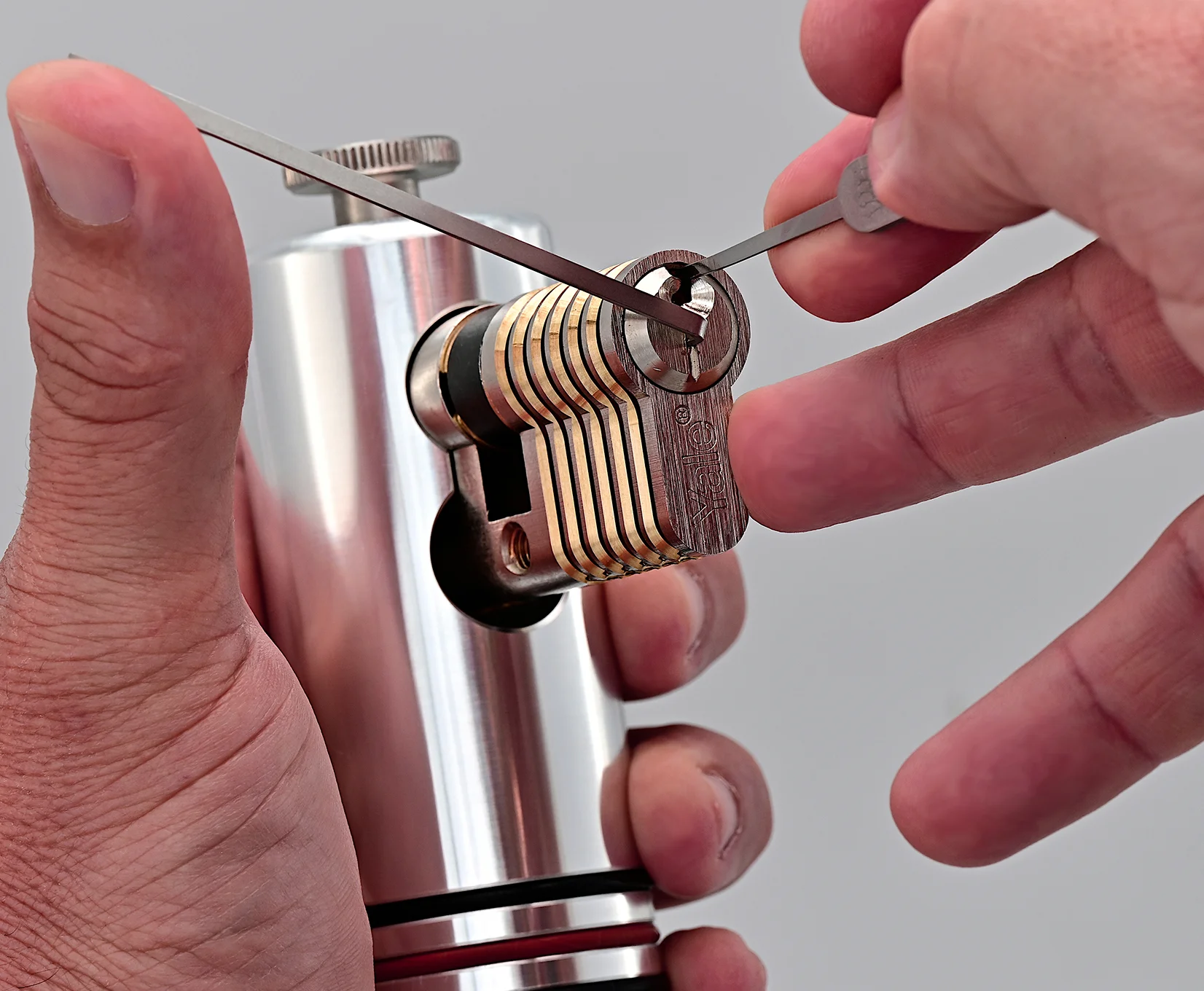
The same applies to lockpicking. It can be a challenging technical pursuit that teaches people about locking mechanisms, fine motor skills, and mechanical principles. The essential condition, however, is that only personal training locks or locking systems explicitly approved for this purpose are used. Technical curiosity ends where the rights of others begin. This applies regardless of whether an opening is described as practice, a dare, or a supposedly harmless challenge. Without permission, there is no legitimate reason to open a lock.


What studies really reveal about residential burglaries
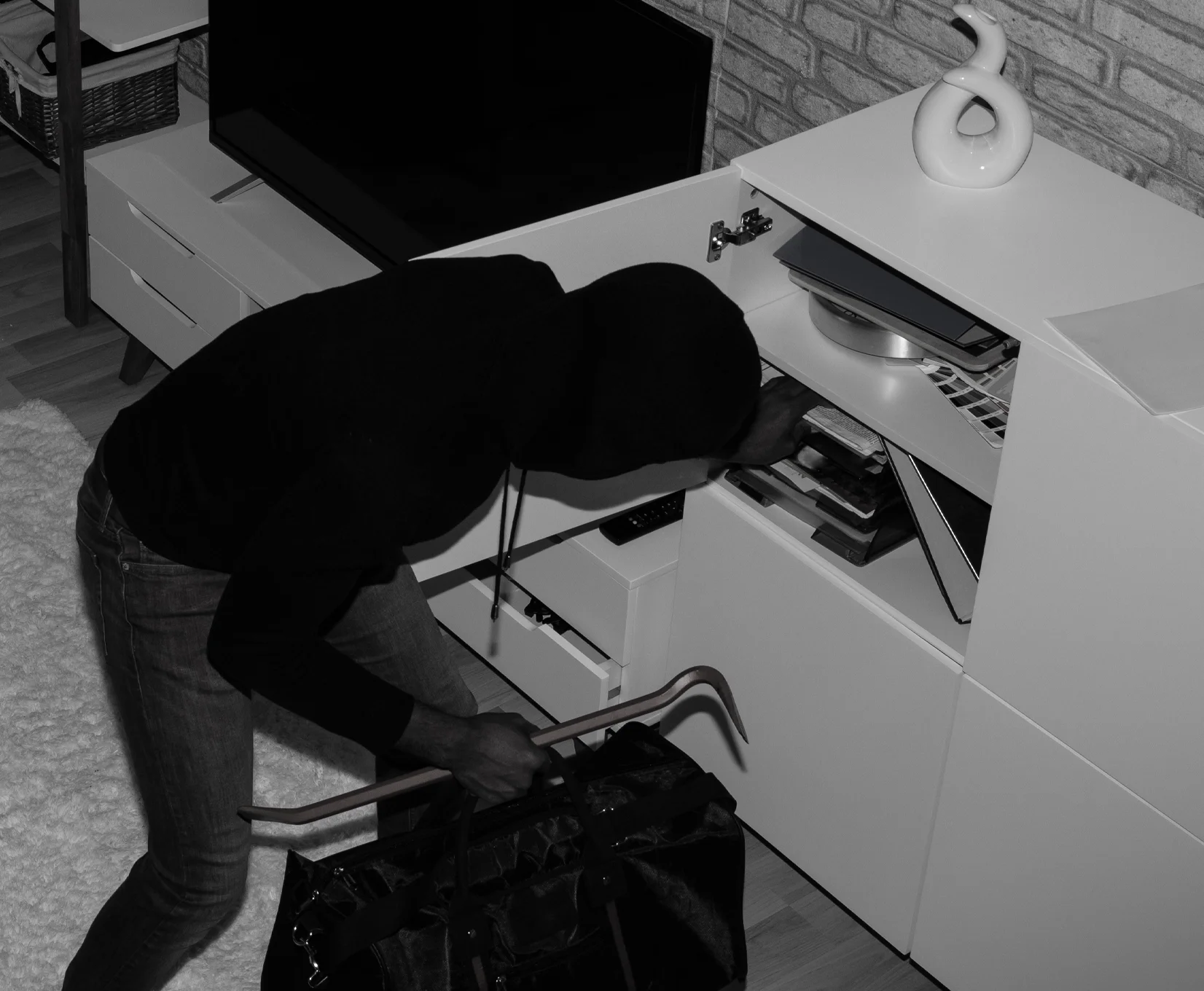
Discussions about opening tools quickly conjure up the image of a highly skilled burglar opening a lock almost silently, for example with a professional pick set.
The available studies paint a different picture.
Germany’s Police Crime Statistics recorded a total of 82,920 residential burglaries, including attempted offenses, in 2025. Of these offenses, 44.9 percent remained at the attempted stage.[3] Germany’s police crime prevention program points out that many residential burglaries are committed by opportunistic offenders. They frequently attack windows and doors using simple prying tools.[4] However, the Police Crime Statistics do not provide a current nationwide breakdown by individual tool type or brand. They therefore cannot tell us how often products from a particular manufacturer were used in a criminal offense.
A statement such as “Tools from brand X were used in only 0.1 percent of all cases” cannot be substantiated using the Police Crime Statistics. Older case file analyses can provide a more detailed picture. One study by the Criminological Research Institute of Lower Saxony evaluated, among other material, 2,403 usable case files from Bremerhaven, Berlin, Hanover, Stuttgart, and Munich. The cases were recorded in the 2010 Police Crime Statistics reporting year, and the findings were published at a later date.[5]
In cases where a tool could be identified, the breakdown included the following:
| Identified tool | Percentage |
|---|---|
| Screwdriver | 42.6 % |
| Pry bar or crowbar | 7.0 % |
| Wrecking bar | 4.4 % |
| Cordless drill | 3.0 % |
| Hammer | 3.0 % |
| Lock pick | 1.3 % |
These figures relate exclusively to cases in which a tool could be identified. More than one tool could also be recorded for a single case. The percentages should therefore not be added together as though they represented exclusive market shares.[6] A further 37.6 percent were grouped in the study simply as “other tools.” Since this collective category was not broken down in greater detail, it is impossible to determine whether these were commonly available tools or specialized opening tools. We have therefore excluded this group from the direct comparison. Nevertheless, the specifically identified tool types reveal a clear difference: Screwdrivers were identified in 42.6 percent of cases, considerably more often than lock picks at 1.3 percent. Pry bars, crowbars, and wrecking bars also ranked well above lock picks in the analysis. Another study from Cologne and Leverkusen confirms the major role played by prying attacks. Among targeted front doors, apartment doors, and secondary entrance doors, prying at the opening side was the most frequently identified method, accounting for 62.29 percent. Attacks on the profile cylinder accounted for 6.46 percent. This category includes various methods of attack and must not be equated with lockpicking.[7]
Prying also played a central role in attacks on windows, balcony doors, and patio doors. This does not mean that specialized opening tools are never misused. Such a claim would be just as misleading as the sweeping assumption that anyone who owns a pick set might use it to commit a crime. Rather, the studies show that many residential burglaries involve force and that commonly available tools play a significant role among the tools that could be clearly identified. The widespread image of a technically sophisticated burglar manipulating a lock precisely and almost without leaving a trace does not reflect the typical methods identified in the cases analyzed.


What the figures do not prove
The studies cited compare neither companies nor retailers. They do not record where a screwdriver, wrecking bar, or lock pick was purchased. The figures therefore provide no information about any particular source of supply. Nor do they absolve manufacturers of professional opening technology of responsibility. Any effective technology can theoretically be used without authorization. This possibility must be taken seriously. However, the figures help to keep the discussion grounded in fact. Anyone discussing burglary protection should consider the methods of attack that are actually used, rather than focusing solely on the method that appears particularly skillful, mysterious, or even cinematic. The reality is often far less elegant. Doors and windows are pried open, hardware is damaged, and cylinders are attacked by force. This distinction is important for property owners because it shows where effective burglary protection needs to begin.
What responsibility means to us in practice
For Multipick, responsibility means neither downplaying unauthorized entry nor presenting it as an entertaining challenge. Our products are intended for professionals and technically minded individuals who work exclusively on their own locking systems or on systems they have been expressly authorized to use. If we receive credible information about the possible misuse of our products, we take it seriously. Multipick has previously worked with the relevant authorities, within the limits of the law, to help assess and investigate such incidents. As a manufacturer, we have a duty to make our position clear and not look the other way when specific concerns arise. Our tools are intended for people who are authorized to open locks, not for people with criminal intentions.
Our commitment
The available studies show that residential burglaries predominantly involve forceful methods and commonly available tools. Professional lockpicking does not reflect the typical method used. This does not change the fact that effective opening technology demands responsibility. For us, this means clearly defining its legitimate use, refusing to downplay misuse, and taking action when specific concerns arise. Our tools are developed for people who are authorized to open locks. For us, that boundary is unequivocal.
Sources / Data as of July 16, 2026
[1] Gehrden Fire Department: “Emergency assistance – helpless person behind a locked door,” incident report dated January 9, 2026 https://www.feuerwehr-gehrden.de/einsatzberichte/hilfeleistung-hilflose-person-hinter-verschlossener-tuer-112/
[2] Feuerwehr.de: “Baby locked inside car,” Munich incident report https://feuerwehr.de/einsatz/berichte/einsatz.php?n=76314
[3] German Federal Criminal Police Office: Police Crime Statistics 2025 https://www.bka.de/DE/AktuelleInformationen/StatistikenLagebilder/PolizeilicheKriminalstatistik/PKS2025/Polizeiliche_Kriminalstatistik_2025/Polizeiliche_Kriminalstatistik_2025_node.html
[4] Police Crime Prevention:
Information on residential burglary
https://www.polizei-beratung.de/themen-und-tipps/einbruch/
[5] Criminological Research Institute of Lower Saxony:
Residential burglary study, documentation from the German Congress on Crime Prevention
https://www.praeventionstag.de/dokumentation/download.cms?datei=DPT2016_KFN-2525.PDF
[6] German Insurance Association: Overview of identified burglary tools https://www.gdv.de/resource/blob/14578/075bdc5e7729a55fd18680c9d8e379a5/grafik-welches-werkzeug-fuer-einbrueche-verwendet-wird-1324783324-data.pdf
[7] German Forum for Crime Prevention: 2017 Cologne study on residential burglaries in Cologne and Leverkusen https://www.kriminalpraevention.de/files/DFK/einbruchschutz/2017_k%C3%B6lner_studie.pdf
[8] Police Crime Prevention: Technical security measures and burglary prevention recommendations https://www.polizei-beratung.de/themen-und-tipps/einbruch/technische-sicherheit/
Note: The studies and figures cited relate to Germany. Conditions in other countries may differ due to different circumstances and data collection methods.
FAQ – everything you need to know
1. Why does Multipick sell professional opening tools?
Professional opening tools are needed when authorized individuals must gain access. This may involve a locksmith, a fire department, a government agency, a security professional, or a trained technician. A person who has fallen may be lying behind a locked door, a child may be trapped inside, or an emergency may require rapid access. Multipick does not develop these tools for curiosity, dares, or unauthorized experimentation, but for people who understand what they are doing from a professional, legal, and practical perspective.
2. Aren’t opening tools also of interest to burglars?
Of course, any effective tool can be misused. This applies to a pick set just as much as it does to a screwdriver, crowbar, or drill. What matters, therefore, is how the tool is used. Multipick speaks openly about this responsibility and draws a clear boundary: Our tools are intended for legal, authorized, and legitimate applications. We categorically reject the unauthorized opening of other people’s property. Technology can be fascinating, but it must never serve as an excuse for disregarding the rights of others.
3. Who uses professional opening technology legally?
Legal users include locksmiths, fire departments, government agencies, property management companies, security professionals, instructors, and technically minded individuals working on their own locks or on locks they have been expressly authorized to use. Locksport can also be a legitimate technical pursuit when it remains clearly within legal boundaries. Someone practicing on a training cylinder is learning about mechanics. Someone working on another person’s property without permission is crossing a line.
4. What role does lockpicking play at Multipick?
For Multipick, lockpicking is part of the world of lock technology, precision mechanics, and training. It demonstrates how locks work, where security mechanisms come into play, and why good locking technology is more than a piece of metal with a keyway. At the same time, one thing is clear: Lockpicking must only be practiced on personal training locks or with explicit permission. Without authorization, there is no legitimate reason to open a lock. This is not a footnote, but the foundation for using this technology responsibly.
5. What do studies reveal about typical residential burglaries?
Studies show that residential burglaries are often carried out using simple, forceful methods rather than sophisticated techniques straight out of a movie. In the cases analyzed, tools such as screwdrivers, crowbars, wrecking bars, cordless drills, and hammers played a considerably greater role than lock picks. This does not mean that specialized tools are never misused. It does show, however, that the familiar image of a silent professional burglar with a pick set often belongs more to the movies than to everyday reality. The truth is usually rougher, louder, and far less elegant.
6. Are burglaries frequently committed using lock picks or pick sets?
The available studies suggest that lock picks and pick sets are not the typical method used in residential burglaries. In an older case file analysis, lock picks accounted for 1.3 percent of the identified tools, while screwdrivers appeared far more frequently at 42.6 percent. These figures do not prove that specialized tools are never misused. They do, however, help keep the discussion grounded in reality. A pick set is not automatically a burglary tool, just as a screwdriver is not automatically a tool used to commit a crime.
7. What does responsibility mean to Multipick in practice?
For Multipick, responsibility means not presenting our tools as toys, dares, or products for operating in a legal gray area. We clearly state what professional opening technology is intended for: authorized applications, training, emergency responders, security work, and technically sound practice. The other side is equally clear: Misuse is not downplayed, romanticized, or presented as a clever trick. If credible evidence of misuse emerges, Multipick takes it seriously and, within the limits of the law, assists with the investigation.
8. Why is the distinction between authorized and unauthorized opening so important?
Because the tool alone does not tell the whole story. A fire department opening a door because a helpless person needs assistance is entirely different from opening someone else’s property without permission. The same technical principle can therefore be judged very differently depending on the situation. Authorization, purpose, and context are what matter. Those who are authorized to gain access need reliable tools. Those who are not authorized have no business working on someone else’s locks. There is no mysterious gray area in between.
9. Why is professional opening technology necessary despite the potential risks?
Because locked doors do more than protect property; in an emergency, they can also become an obstacle. When someone has fallen, a child is trapped, or emergency responders need to gain access quickly, the situation calls for a professionally sound solution, not a theoretical debate. Professional opening technology can help prevent damage, save time, and allow the situation to be properly assessed. Without these tools, brute force would often be the only option. And that is rarely the better answer, even if a sledgehammer can look remarkably decisive.
10. What is Multipick’s position on misuse?
Our position is unequivocal: Multipick does not tolerate the misuse of professional opening tools. Our products are made for people who are authorized to open locks or who practice legally on their own or expressly approved locking systems. Unauthorized opening, criminal intent, or using these tools on someone else’s property without permission directly contradicts their intended purpose. Good technology requires skill, but it also requires integrity. Without that, all that remains is a piece of metal in someone’s hand, and that is not enough.
About the Author
Lars Buchwald has been an integral part of the Multipick team since 2006, where he dedicates his passion and expertise to marketing and graphics. As a trained graphic designer and copywriter, he brings a wealth of experience and creativity to his work, which enables him to convey the messages of the ingenious tools in an appealing and convincing way. With a keen sense for the needs of the target group, he steers Multipick's marketing fortunes. His commitment is characterized by a high degree of sensitivity and the right richer at the right time.
As a native of Bonn, Lars not only has close ties to the region, but has also firmly integrated his passion for marketing spear tools into his professional work. His attachment to the city is reflected in his work and gives his marketing campaigns an authentic, Bonn touch.
Related Articles
Burglary Protection Myths
That only happens to other people …
Lockpicking Across the EU
Lockpicking in the EU: Differences in National Laws – and What Really Happens
Locksmith Services – A Good Reputation Opens Doors
"You're honest, aren't you?" – A Question Loaded with Meaning
About Multipick
Multipick was established here in Bonn in 1997 and has had its headquarters and production facilities here on the Rhine ever since.
Why should we leave here? Anyone who has been here before will agree that it is a very beautiful place and that the people are ‘typically Rhineland’, open-minded and friendly. From an early stage, we began to occupy ourselves with a wide variety of entry tools. We tried out lock snappers and core extractors such as the Bell and gathered a wealth of experience with a wide variety of tools. Whether it was a lock pick set or special tools for fire brigades and locksmiths, in the end the door or window had to be opened. In line with the motto, you got the problem and we got the solution.
Many tools, irrespective of hobby or professional, are dispatched from our warehouse to destinations throughout the world.
Opening tool kits for caretakers and locksmiths, pick sets and lock picking accessories for Locksport enthusiasts and Hobbs hooks for specialists to unlock locked safes. There are thousands of different ways to deploy our specialised tools. Our TFG latch plates and key turners allow a closed door to be reopened. QA Pro 2 and our V-Pro core pulling screws can be used to open a locked door. We also offer milling burrs and drill bits for those situations where there really is no other way. Many useful aids such as MICA opening cards, wedges, door latch spatulas, door handle catches and spiral openers, which are all useful tools to help you get the job done. But even if things get a bit complicated, you are in good hands with us. Products such as the Kronos and Artemis electric picks are our top highlights. Anyone who likes to open dimple locks or disc locks will be delighted with the ARES system. For opening windows, we offer you a range of top products from Kipp-Blitz. Favoured by emergency services such as the fire brigade, THW (Federal Agency for Technical Relief) and police. Many of our tools are manufactured in-house. This gives us the liberty to manufacture quickly and in a customer-orientated manner. No lengthy supply chains and subcontractor dependencies. This has a number of advantages both for you and, of course, for our environment. One big advantage is that you get everything from a single source, enabling us to offer you consistent quality. This is also our promise to you, all from a single source, Made in Germany, Made in Bonn - promised.

