

Multipick tools are of the highest quality, with fast delivery and excellent support. I would order again at any time!

Lars Buchwald / 12.07.2026
WHAT IS A LATCH? SIMPLY EXPLAINED IN THE MULTIPICK LOCK GLOSSARY
KNOWLEDGE ABOUT LOCK CYLINDERS AND LOCKS
“In our glossary, we regularly expand the available knowledge about lock technology. We explain technical terms and clearly show how different systems, components and functions work together.”
WHAT IS A LATCH?
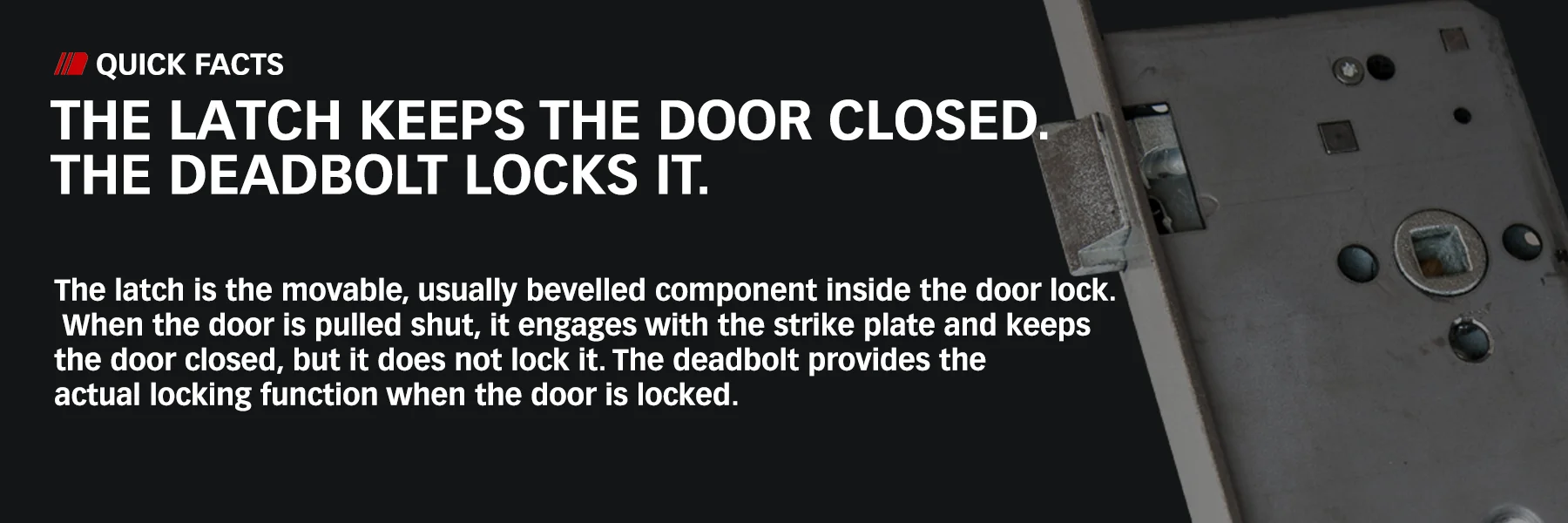
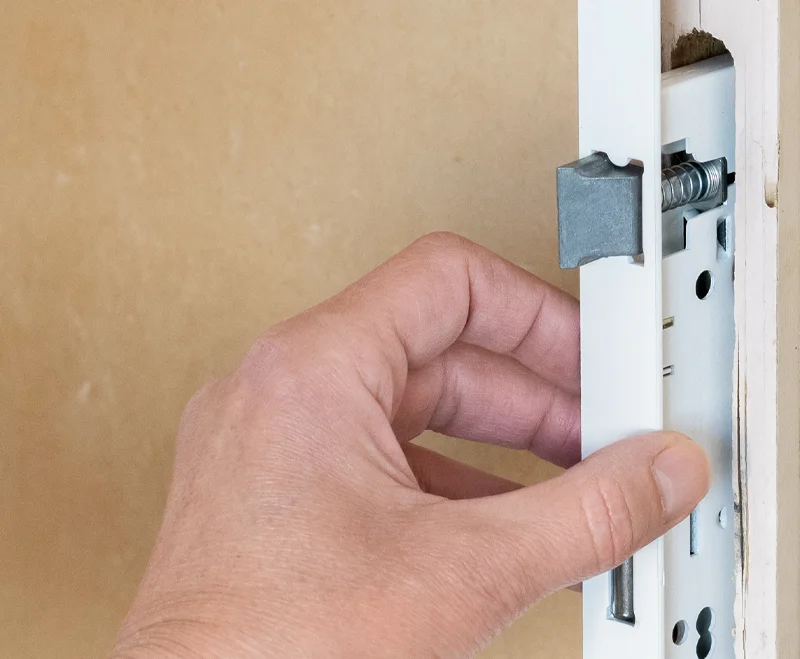
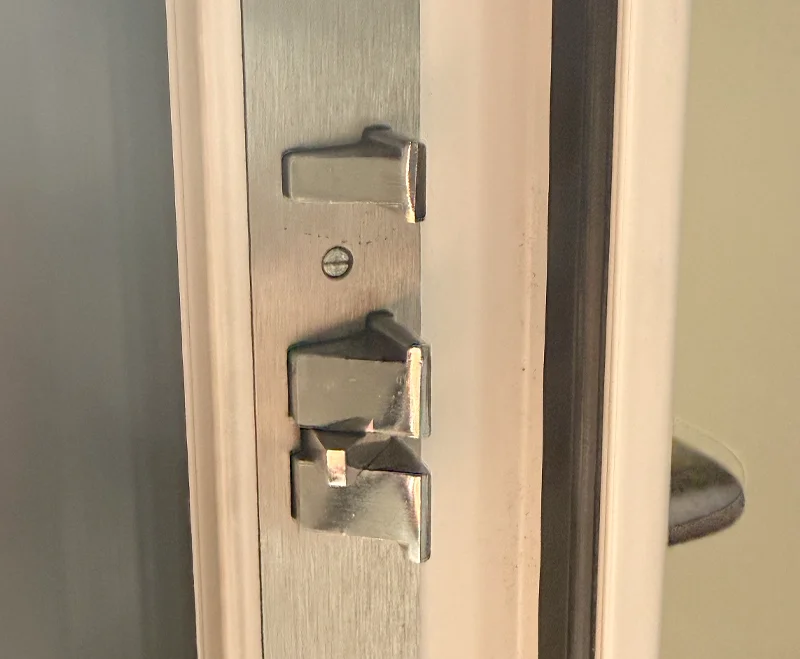
The latch is the movable, usually bevelled metal component of a lock that engages with the strike plate in the door frame when the door is pulled shut. It is located at the edge of the door, where the door meets the frame. If you close a door slowly, you can see how the latch is briefly pushed back when it touches the strike plate and then springs forward again. This engagement keeps the door closed. In short: The latch keeps a door closed without locking it. This is the most important difference between the latch and the deadbolt. The deadbolt only becomes active when you turn the key or, in some locks, when an automatic locking mechanism is triggered. The latch, by contrast, operates whenever the door is simply pulled shut.
WHAT EXACTLY DOES THE LATCH DO?
The latch performs a simple but very important task: it keeps the door in the frame. When you pull a door shut, the following happens: The bevelled side of the latch meets the strike plate. The sloping surface briefly pushes the latch into the lock case. As soon as the door is fully closed, the latch springs back out and engages with the opening in the strike plate. This keeps the door closed. However, the door is not actually locked. It has merely fallen shut. This distinction is important. Under certain conditions, a door that has only fallen shut can be opened differently from a locked door. For locksmiths, fire brigades, property managers and security technicians, this distinction is not a minor detail but part of everyday work. A door held closed only by the latch is in a different state from a door where the deadbolt has also been extended.
LATCH OR DEADBOLT, WHAT IS THE DIFFERENCE?
These terms are often confused in everyday language. That is understandable, because both components are located inside the lock and both somehow keep the door closed. Even so, the latch and the deadbolt are two completely different components. The latch keeps the door closed as soon as it falls shut. The deadbolt locks the door only when it is locked with a key. The latch is therefore responsible for the normal closing of the door. The deadbolt provides the actual security. A simple example: You pull your front door shut behind you without turning the key. In this case, the door is usually held closed only by the latch. If you then turn the key, the deadbolt extends. The door is now locked.
HOW CAN YOU IDENTIFY THE LATCH?
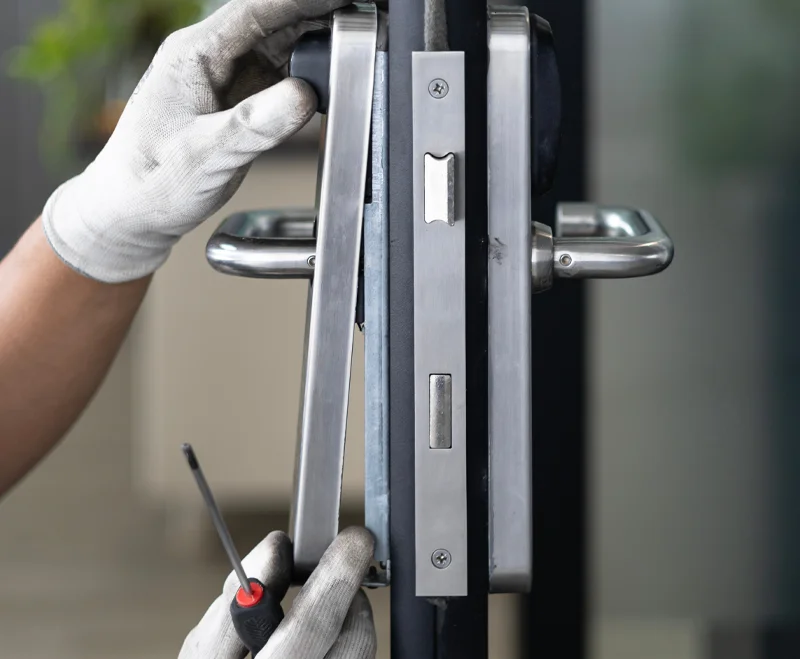
The latch can usually be identified by its bevelled shape. It is located on the lock side of the door and points towards the door frame. It is clearly visible when the door is open.
Typical features include:
• It is spring-loaded.
• It can be pushed in.
• It springs back out.
• It is bevelled on one side.
• It engages with the strike plate when the door closes.
The bevel is important because it allows the door to fall shut without operating the handle. Without this sloping surface, the latch would have to be actively retracted every time the door was closed. That would be about as convenient as a car where you had to get out before every bend and turn the wheels by hand.
WHY IS THE LATCH BEVELLED?
The bevelled shape is the key to the entire function. When the door is closed, the bevelled side of the latch slides along the strike plate. This automatically pushes the latch back. As soon as it reaches the corresponding opening in the strike plate, the spring pushes the latch back out. This allows the door to simply fall shut. This small bevel therefore determines whether a door can be closed conveniently. You do not notice it as long as everything works. You only become aware of it when the latch jams, becomes dirty or no longer aligns correctly with the strike plate.
WHAT HAPPENS WHEN THE DOOR HANDLE IS PRESSED?
When you press the door handle down, the latch is mechanically retracted. This releases it from the strike plate and allows the door to be opened. On many interior doors, this can be seen immediately. Press the handle, the latch retracts and the door opens. The situation may be slightly different with front doors or entrance doors. These often have a fixed knob on the outside. From the outside, the latch cannot simply be retracted using a handle. This is exactly why you can lock yourself out even though the door has not been locked with a key. The door has only fallen shut, but there is no direct way to operate the latch from the outside. This is one of the most common situations encountered by locksmiths.
WHAT TYPES OF LATCH ARE THERE?
There are several different types commonly encountered in everyday use.
The standard latch
This is the classic latch found in many mortice locks. It keeps the door closed and is retracted using the door handle.
The key-operated latch
On front doors or apartment doors with a fixed knob on the outside, the latch can often be retracted using the key. This function is known as the key-operated latch function. When the key is turned in a particular direction, it does not move the deadbolt but retracts the latch instead.
The roller latch
Instead of a bevelled latch, this version uses a small roller. It is often used on certain front doors, swing doors or doors with special closing requirements. This allows the door to close more smoothly.
Latch adjustment
On some locks or strike plates, the position can be adjusted so that the door closes correctly. This is particularly important when doors move, warp or no longer sit precisely within the frame.
WHAT DOES THE LATCH HAVE TO DO WITH SECURITY?
The latch is primarily a component for convenience and keeping the door closed. It ensures that the door remains shut. For actual security, however, the deadbolt is the decisive component. A door that has only fallen shut is therefore not as secure as a door that has been locked with a key. This is particularly important for front doors and apartment doors: anyone who wants to secure the door properly should lock it. Only then does the deadbolt extend and provide the actual locking function.
WHY DOES A LATCH SOMETIMES JAM?
A latch can jam or fail to engage properly for various reasons.
Common causes include:
• The door has warped.
• The strike plate is no longer correctly aligned.
• The latch is dirty.
• The spring inside the lock is weak or defective.
• Paint, dirt or old lubricant is restricting movement.
• The door seal is applying too much pressure.
• The lock is worn.
This often becomes noticeable when the door only closes with pressure, the handle becomes harder to operate or the latch no longer springs back properly. It is worth taking a closer look. Sometimes a minor adjustment to the strike plate is sufficient. Sometimes the lock is worn. And sometimes the door itself is the problem.
WHAT SHOULD YOU NOT DO?
If a latch is jammed, you should not use force. Avoid aggressive levering, poking around with unsuitable objects or soaking the mechanism in oil on the assumption that more is always better. Too much lubricant or the wrong type of lubricant can attract dirt and make the problem worse over time. Sharp tools can also damage the latch, lock or strike plate.
It is better to check the following first:
• Does the latch enter the strike plate cleanly?
• Can it be pushed in easily?
• Does it spring back fully?
• Is the door rubbing against the frame?
• Is the strike plate positioned too high, too low or too far inward?
• Has the door possibly warped?
For front doors, multipoint locking systems or security-relevant doors, a qualified specialist should inspect the problem if there is any doubt.
WHAT ROLE DOES THE LATCH PLAY IN DOOR OPENING?
For professional users, the latch is an important part of assessing the situation. A door that has merely fallen shut is technically very different from a locked door. The following always applies: opening techniques belong exclusively in qualified hands and may only be used on property you own, or on third-party property with explicit authorisation. This clear distinction is important to Multipick. Technology is fascinating, but it requires responsibility. For locksmiths, public authorities, fire brigades and security professionals, understanding the latch is nevertheless fundamental. Anyone who knows which component is currently keeping the door closed can assess the situation more accurately and make a better-informed decision about the appropriate professional approach.
GLOSSARY
Latch
Movable component inside the lock that engages when the door closes and keeps the door shut.
Deadbolt
Component that extends from the lock when the door is locked and secures the door.
Strike plate
Metal component in the door frame into which the latch and deadbolt engage.
Key-operated latch function
Function that allows the latch to be retracted using the key.
Door that has fallen shut
A door that is closed but has not been locked. It is usually held closed only by the latch.
Only 9 available

Door Latch Slider - TFG Set 5 pcs. (15/20/25/30/35 mm)
The (in our opinion) perfect Door Latch Slider The latch opening slider “TFG” completes our selection of tools for the opening of closed but unlocked doors . We are absolutely enthusiastic about the tool’s effectiveness and quality and use the "TFG" on an almost daily basis ourselves. The "TFG" comes in 5 different sizes: 15, 20, 25, 30 & 35 mm, each size optimized for the different types of offset door designs. Experience tells us that there is no better tool for the simple opening of closed but unlocked doors. Put this to the test yourself! The use is incredibly easy! Insert the "TFG" in the gap between door and frame, slide it down to the latch and the door opens.It is made out of highly flexible spring steel and is only as thick as 0.8 mm. The "TFG" can be used effectively almost everywhere. The "TFG" has no sharp edges, and does not cause scratches or other damages on the door or the frame. If the sliding of the "TFG" is made difficult by the sealing strip, lubrication of the "TFG" is very effective.
SKU#: 33849
Available - Delivered within 1-9 days, depending on shipping method and country of delivery
In Stock

Latch Opening Card Set 9pcs. 3x0.25/3x0.35/3x0.50 mm
The latch opening cards are made from a type of plastic specifically created for their use. They allow a fast and easy opening of doors that are “only” closed, but not locked. Especially in cases where the gap between door and frame is too narrow for the use of latch pick needles these cards can prove their usefulness.
SKU#: 33912
Available - Delivered within 1-9 days, depending on shipping method and country of delivery

Spiral Opener ACE - Set 4 pieces - Ø 1,5 + 1,7 mm
Opening-Set for single- and double-offset doorsEvery locksmith knows the problem of closed double-offset doors. The new ACE spiral needles, made of high quality spring steel, allow the non-destructive opening of double-offset doors in most cases. The use is very simple: The tool is inserted in the narrow gap between door and frame by turning until it makes contact with the latch. Continued turning pushes back the latch. Usually this process does not cause any damages except a pierced sealing strip. The set consists of four (4) different tools for doors with the lock mounted either on the right or on the left and 2 different material strengths (1.5 and 1.7 mm) for the different types of offset door designs. Of course, the ACE-tools are very well suited for opening simple offset doors as well!For very tightly engaging (closing) double and simple offset doors the ACE-Mini-Set (2 pieces) of only 1.25 mm needle-strength is especially suited.
SKU#: 3385
Available - Delivered within 1-9 days, depending on shipping method and country of delivery
FAQ – EVERYTHING YOU NEED TO KNOW.
1. What is a latch in a door lock?
The latch is the movable, usually bevelled metal component inside the lock that engages with the strike plate when the door is pulled shut. It keeps the door closed but does not lock it. This is why a door held only by the latch is closed, but not locked. It may sound like a small distinction, but it is quite important in everyday use. The latch provides convenience, while the deadbolt provides the actual security.
2. What is the difference between a latch and a deadbolt?
The latch keeps the door closed, while the deadbolt locks it. When the door is pulled shut, the latch automatically springs into the strike plate. The deadbolt only extends when the key is turned or an automatic locking mechanism is activated. A door that has merely fallen shut is therefore usually held closed only by the latch. A locked door is additionally secured by the deadbolt. Anyone who understands this distinction will immediately understand why not every closed door is actually locked.
3. How can you identify the latch on a door?
The latch is located at the lock edge of the door, where the door leaf meets the frame. It can usually be identified by its bevelled shape. It can be pushed in, springs back out under spring pressure and engages with the strike plate when the door closes. It is clearly visible when the door is open. When the door handle is pressed, the latch retracts. That is the brief moment when the door says: All right then, I will let you through.
4. Why is the latch bevelled?
The bevel allows the door to simply fall shut. As the door closes, the bevelled side of the latch slides along the strike plate. This briefly pushes the latch into the lock. As soon as it reaches the opening in the strike plate, it springs back out and keeps the door closed. Without this bevel, you would have to press the handle every time you closed the door. That would not be dangerous, but it would be about as elegant as a shopping trolley with one wheel that has plans of its own.
5. What happens when the door handle is pressed?
When the door handle is pressed, the latch is mechanically retracted. It disengages from the strike plate, allowing the door to be opened. On interior doors, this is very easy to see: handle down, latch in, door open. Front doors or apartment doors with a fixed knob on the outside work differently. From the outside, the latch cannot simply be operated using a handle. This is why you can lock yourself out even though the door has not been locked with a key. It has merely fallen shut.
6. What types of latch are there?
The best-known type is the standard latch found in a mortice lock. It keeps the door closed and is retracted using the handle. Front doors often have a key-operated latch. In this case, the latch can be retracted using the key when there is a fixed knob rather than a handle on the outside. There are also roller latches, which use a small roller instead of the traditional bevelled shape. They are often used where doors are intended to close especially smoothly or in a more controlled manner.
7. What does key-operated latch mean?
A key-operated latch can be retracted not only with the door handle, but also with the key. This is particularly important on apartment and front doors with a fixed exterior knob. When the key is turned in the appropriate direction, it does not move the deadbolt but retracts the latch instead. This allows a door that has merely fallen shut to be opened from the outside even though there is no handle fitted there. The mechanism therefore briefly allows the key to take over the role of the door handle.
8. What role does the latch play when a door has fallen shut?
When a door has merely fallen shut, it is usually held closed only by the latch. The deadbolt has not been extended. This is exactly what distinguishes a door that has fallen shut from a locked door. For locksmiths, fire brigades, property managers and security professionals, this distinction is very important because the technical situation must be assessed in a completely different way. A door held closed only by the latch is in a different state from a door that is also secured by the deadbolt.
9. Why does a latch sometimes jam?
A latch can jam if the door has warped, the strike plate is no longer correctly aligned, dirt or old lubricant is restricting movement, or the lock is worn. A door seal that is too tight can also prevent the latch from engaging properly. Typical signs include a stiff door handle, a door that only closes with pressure, or a latch that does not spring back fully. Often the latch is not the only cause, but rather the interaction between the door, frame, lock and strike plate.
10. What should you do if the latch no longer works properly?
If the latch jams or does not engage properly, the first step is to check whether it moves freely and aligns correctly with the strike plate. Force, screwdriver acrobatics or half a bath of oil are not a good idea. Too much lubricant or the wrong type can attract dirt and make the problem worse over time. On simple interior doors, a minor adjustment may be enough. For front doors, multipoint locking systems or security-relevant doors, it is better to have a qualified specialist check whether the problem lies with the lock, the strike plate or the door itself.

MULTIPICK – EXCELLENTLY RATED ON GOOGLE
Four stars for the product range and quality. One star deducted because of the packaging, otherwise everything was perfect.
Fast and professional support. Great tools, quick shipping to the UK. Highly recommended.

I have been a passionate lockpicker for years and also carry out physical security assessments professionally. Multipick’s tools are consistently of very high quality and cannot be compared with those of other providers, such as Peterson or Sparrows. This applies not only to the picks, but also to all the other tools. The prices are comparatively high, but the quality fully justifies them. Made in Germany still means something here.
Fast delivery, good quality and very friendly service. I lost a small part from one of the products I ordered after a short time, and when I contacted the company, a replacement was sent to me free of charge.
I am the owner of Likwer Locksmith Service. I order all the tools I need for my work from this company. Excellent, fast and high-quality service. Very quick delivery. I can recommend this company with complete confidence. Kind regards, Likwer Locksmith Service

